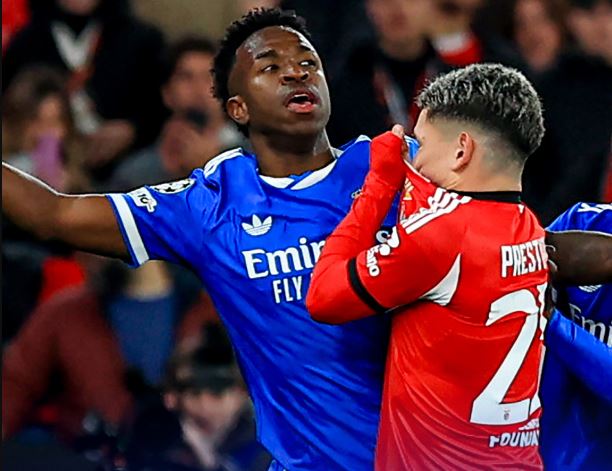
An explanation of the unique Basque-only policy held by Athletic Club ahead of their Champions League clash with Arsenal.
Athletic Club are unlike any other European heavyweight, bound by a self-imposed philosophy that only allows them to select players from their own region.
This remarkable tradition is part of what makes the Basque side special — and why their appearance in Europe’s elite competition for the first time since 2014/15 has caught the imagination.
As we outlined in our Bilbao vs Arsenal tips, the Gunners may find themselves up against more than just a football team; they’re facing a philosophy.
What is Athletic Club’s Basque-only policy?
Athletic’s policy is not an official La Liga rule, but a club philosophy enshrined in their identity.
The club’s statutes state they will be guided by “respect for its traditional sporting philosophy.” In practice, this means Athletic only field players who:
-
Are born in the Basque Country (which spans parts of northern Spain and southwestern France).
-
Have come through Athletic’s academy, Lezama, or the academies of other Basque clubs.
-
Grew up in the region, even if they were born elsewhere.
This makes Bilbao one of world football’s most distinctive clubs, pulling talent from a region of around 3.1 million people — roughly the same population as Wales.
When did the Basque-only philosophy begin?
The exact origins are debated. Athletic were founded in 1898, initially with strong British influence through shipyard workers and students returning from England.
The romantic version says the policy began in 1911 after Athletic were stripped of the Copa del Rey for fielding ineligible foreigners.
Other historians argue it was simply because Biscay had become a football hotbed, removing the need for imports.
The last non-Basque player to appear was Englishman Andrew Veitch, who featured in a friendly in 1911. Since then, Athletic have stood apart from Spanish rivals.
Who qualifies to play for Bilbao?
Eligibility has evolved over the decades. The club began with players strictly from Biscay before broadening to include anyone from the wider Basque Country, and later, players who grew up in the region.
-
Ernesto Valverde, Athletic’s current coach, was born in Extremadura but raised in Vitoria-Gasteiz.
-
Aymeric Laporte, from southwest France, joined Athletic’s youth ranks at 15 before playing over 200 senior games.
-
Jonas Ramalho, born in Bilbao to an Angolan father, became the club’s first Black player in 2011.
-
Nico and Inaki Williams, sons of Ghanaian parents, are now among the team’s biggest stars.
The club have occasionally debated expanding the definition — for example, to include children of Basques abroad — but the philosophy has held firm.
Have other clubs tried similar policies?
Yes, though not with the same success. Basque rivals Real Sociedad kept a similar rule until 1989, when they signed Liverpool striker John Aldridge.
In Mexico, Chivas Guadalajara have a Mexican-only policy, while Ecuador’s El Nacional limit themselves to local players. But neither has matched Athletic’s consistency at the top level.
Has the Basque-only policy been successful for Bilbao?
Remarkably, yes. Alongside Barcelona and Real Madrid, Athletic are one of only three clubs never to have been relegated from La Liga.
They are Spain’s third-most decorated club, with 36 trophies, and lifted the Copa del Rey as recently as 2024.
Former Spain goalkeeper Andoni Zubizarreta summed it up: “When you’re different in a market where everyone does the same, your shirt is worth more, your fans invest more — you’re unique.”
That uniqueness is what Arsenal will encounter on Tuesday night, not just on the pitch but in the stands, where Athletic’s fans proudly defend a tradition now more than 110 years old.

 Chelsea Make Formal Contact With Free-Agent Striker Ahead of Summer Move
- Enzo Fernandez ready to sign five-year Real Madrid deal in Chelsea twist
- Federico Chiesa warns he could leave Liverpool without Iraola assurances
- Liverpool Pay the Price as Real Madrid’s Ibrahima Konate Package Is Revealed
- Chelsea and Man City locked in battle for Zadok Yohanna as Newcastle fall behind
- Tottenham target Harry Wilson after standout season with 19 goal involvements
- Liverpool Star Opens Up on Depression After Diogo Jota Loss in Emotional Interview
- Roma set to receive more money from Riccardo Calafiori’s Arsenal transfer
- Zielinski appears to confirm Dumfries to Real Madrid and drops Lewandowski Serie A hint
- Juventus Shortlist Six Strikers to Replace Dusan Vlahovic