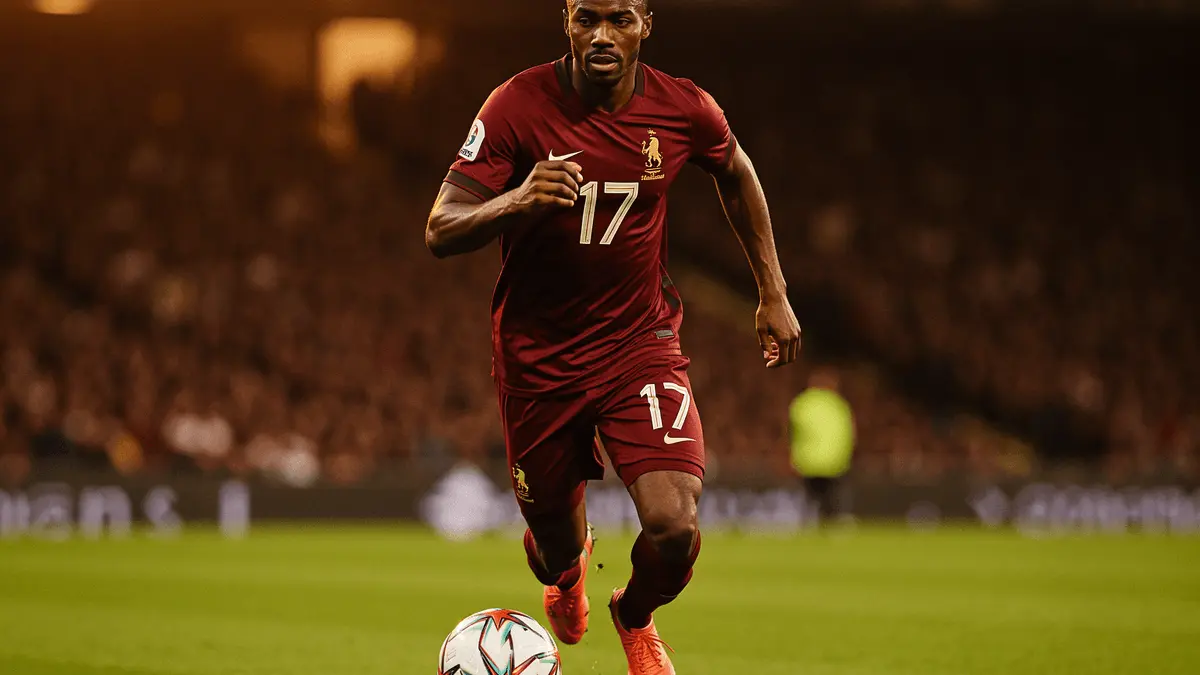

Twenty-two years. That is how long Arsenal waited to call themselves Premier League Champions again. Since the 2003/04 Invincibles – the last team to win the title without losing a single league game – the Gunners had watched Manchester City, Chelsea, Liverpool and United carve up the trophy between them while Arsenal came agonisingly close and fell short. Twice in three years under Mikel Arteta they led the race deep into the spring and watched it slip. Not this time.
The 2026 title was sealed with a game to spare when Bournemouth held Manchester City to a 1-1 draw, and the Emirates erupted. For a deep look at how Arsenal built their advantage over City across the season’s most critical stretch, our coverage of Arsenal’s title race position and their edge over Manchester City sets the full context. But the story of how they got here is told in ten moments – moments where the season could have collapsed and didn’t, where individual brilliance met collective steel, where Arteta’s project finally delivered its defining reward.
Here are the ten moments that made Arsenal Premier League Champions in 2026.
Moment 1 – Pinching Eze Off Spurs Was the Most Ruthless Piece of Business in Years
The transfer window had already delivered Viktor Gyokeres, Martin Zubimendi and Noni Madueke. Then, during the first week of the season, Arsenal did something that would define the entire campaign before a ball was kicked competitively. Eberechi Eze – all but signed by Tottenham – called Mikel Arteta. Arteta was walking into a board meeting. He turned around, made the case, and Arsenal moved.
Spurs lost out on a player who would go on to torment them specifically, repeatedly, and historically. The ruthlessness of that intervention – the sheer nerve of pulling a deal from under your fiercest rivals at the eleventh hour – set a tone. It told you everything about how different this Arsenal were from the clubs that had spent years apologising for existing in the shadow of City’s wealth. They saw an opportunity and they took it.
That decision, made in a corridor before a meeting, was arguably the most consequential ninety seconds of Arsenal’s entire season.
Moment 2 – Martinelli Chips Donnarumma and Takes Two Points Off City in September
Arsenal were struggling at the Emirates in September. Erling Haaland had put Manchester City ahead inside ten minutes, and the Gunners were grinding without reward – despite restricting Guardiola’s side to just 33.2 per cent possession, the joint lowest of his entire managerial career. City were winning ugly. Arsenal looked like they would pay for it.
Then Eze clipped a precise, measured ball over the City defence in stoppage time. Gabriel Martinelli was in behind, one-on-one with Gianluigi Donnarumma, and he chipped him. A point for Arsenal – but more crucially, two points taken directly off City in a title race that would be decided by margins. The moment also announced Eze’s quality to those still wondering whether Arsenal had overpaid.
They had not.
Moment 3 – Gabriel Ends the Newcastle Hoodoo When Arsenal Needed It Most
October. Liverpool were flying – 100 per cent record, backed by the biggest transfer window in Premier League history, threatening to turn the race into a procession. Arsenal travelled to St James’ Park having lost four of their previous five visits. It felt like a trap.
Nick Woltemade put Newcastle ahead in the 83rd minute. The hoodoo was continuing. Then Mikel Merino – former Newcastle midfielder, now in red and white – levelled from a short corner routine. Martin Odegaard, returning from injury, came off the bench and immediately put in a corner that Gabriel met with a thumping header. Arsenal won. Arteta later reflected: “If we’d lost at Newcastle, we’d have been eight points behind Liverpool in October.” The following weekend, Liverpool lost at Chelsea and an Eze goal against Palace took Arsenal top for the first time all season. They barely left.
Moment 4 – Thomas Frank Asked “Who’s Eze?” and Got His Answer in November
Former Spurs boss Thomas Frank tried to be clever in his pre-match press conference before the north London derby in November. “Who’s Eze?” he joked. It backfired in the most spectacular fashion imaginable. Eze scored a hat-trick – the first Arsenal player to do so in a north London derby since 1978 – as the Gunners ran out 4-1 winners at the Emirates.
Sky Sports features writer Nick Wright put it perfectly afterwards, describing the performance as “a brutal exhibition of what Spurs missed out on, performed by a man seemingly on a mission to hammer home the message.” It was not just a win. It was a statement delivered to the club that almost signed him, in front of their own fans, with a hat-trick. Eze then scored again in the February rematch – another 4-1 – taking his derby tally to five goals for the season against Spurs alone.
Thomas Frank does not joke about Eze any more.
Moment 5 – The Tactical Masterclass That Left Guardiola With 33% of the Ball
It deserves its own moment separate from Martinelli’s goal. The defensive and structural display Arsenal produced in that September City match was extraordinary – and it was not a one-off. Under Arteta, Arsenal had progressively refined their shape into something that could suffocate elite opposition in a way earlier versions of this team simply could not manage. Wingers holding width, full-backs less committed to inverting, defensive transition metrics that ranked among the league’s best.
Restricting Guardiola’s City to 33.2 per cent possession – joint lowest of his career – was not luck. It was the product of a defensive system built deliberately over multiple windows, anchored by physical midfielders and an elite set-piece operation under coach Nicolas Jover that had been quietly manufacturing ten to fifteen additional goals per season since 2021. This Arsenal side knew exactly how to defend, when to defend, and how to make elite teams feel ordinary. That September night demonstrated it with startling clarity.
Moment 6 – “We’re Going to Win the League!” – The Brighton Win That Made Fans Believe
Arsenal beat Brighton 1-0 in March and it was not pretty. Fabian Hurzeler was furious afterwards, saying he would “never tell his team to play like that.” The football was functional, cynical in moments, and utterly effective. But what happened at full-time was something else entirely.
The whistle blew and news filtered through simultaneously – Manchester City had dropped points at home to Nottingham Forest. Arsenal were seven points clear at the top of the Premier League with the season entering its final stretch. For the first time all campaign, the Emirates crowd was singing “We’re going to win the league.” There was a recognition, audible in the stands, that City were not the same force of previous title races. The dynasty was cracking. Arsenal were still standing.
Moment 7 – Sixteen-Year-Old Dowman Scores the Youngest Goal in Premier League History
Arsenal were being held 0-0 by David Moyes’ Everton at home with fifteen minutes left. Arteta made a substitution. On came Max Dowman – sixteen years old, third Premier League appearance, a teenager who had no business being in that situation. It was either desperate or visionary. Probably both.
Dowman’s deep cross found Piero Hincapie at the back post, Gyokeres tapped home, and Arsenal led. Then, with Jordan Pickford up for a corner, Dowman ran the entire length of the pitch and tapped into an empty net – becoming the youngest Premier League goalscorer in the competition’s history. Gary Neville called it Arsenal’s “defining Premier League moment” of the season. He was not wrong. Arteta had found a match-winner in the most unlikely place imaginable and it was the sort of moment that titles are built on.
Moment 8 – Eze’s Individual Brilliance Beats Palace and Newcastle on His Own
Two goals across two separate matches. Two moments that very few players in this Arsenal squad – or any Premier League squad – could produce. Eze’s individual winners against Crystal Palace and Newcastle were the sort of strikes that shift title races by a combined four points before the opposition has worked out what happened.
These were not tap-ins or set-piece goals. They were moments of technical quality that separated Eze from the rest of the league and justified every word Arteta said when he turned around in that corridor in the first week of the season. Bukayo Saka had long been the emblem of this Arsenal project’s identity – the ultimate product of the club’s youth-driven, disciplined model. Eze arrived as proof that the model could still acquire elite talent from outside when the moment demanded it.
Moment 9 – Declan Rice Tells His Team “It’s Not Done” After the Etihad Defeat
Arsenal lost 2-1 at the Etihad Stadium. City were celebrating. The momentum appeared to shift. And then a video circulated of Declan Rice in the Arsenal dressing room – or pitch-side, unmistakable in his body language – telling his teammates plainly: “not done.” No drama. No speeches. Just a statement of fact from the man whose arrival from West Ham had been the first signal that this Arsenal were serious.
Guardiola himself was asked about it. His response was unguarded: “I love that. I love that. That’s why Arsenal is there. I saw it and it shows what Declan Rice means. That’s the Arsenal mentality.” From that moment, Arsenal won four straight league games without conceding a single goal. The Rice clip became shorthand for everything Arteta had spent years building – the mentality, the belief, the refusal to accept that a bad result was a verdict on the season. For a detailed look at how Arteta structured his approach to the tactical battle with City across the decisive phase, our analysis of the Arsenal vs Manchester City tactical battle during the title run breaks down how the Gunners managed the rematch.
Four wins. Zero goals conceded. The race was not done at all.
Moment 10 – Bournemouth Do Arsenal a Favour and Twenty-Two Years End in an Instant
It came with a game to spare. Bournemouth held Manchester City to a 1-1 draw, and the Premier League title belonged to Arsenal. No dramatic final-day calculation, no goal-difference anxiety – just the clean, clear confirmation that Mikel Arteta’s side had done enough, over 37 games, to be called Premier League Champions for the first time since 2003/04.
The Emirates scenes were everything you would expect from a fan base that has carried the weight of twenty-two years of near-misses, rebuilds, and heartbreak. The 2026 title was not won the way the Invincibles won it – unbeaten and imperious – but it may have been harder. This Arsenal overhauled a Pep Guardiola side across 38 games in the most financially competitive league environment in football history, using coaching, recruitment discipline, and a squad depth the club had never previously managed to assemble. As we covered in Arsenal’s Champions League run this season, the league title was not even the only piece of history Arteta’s side were writing simultaneously.
Jamie Carragher called it “the blueprint for how to catch a state-backed superpower with coaching and recruitment.” Ian Wright said Arteta had “rebuilt the club from the floor up.” Both are right. The 2026 title does not just end a twenty-two-year wait – it announces that Arsenal are back as a structurally sustainable force, not a one-season wonder.
Let that land.
Our Verdict
This was not a fortunate title. It was earned through better recruitment than any Arsenal squad in the modern era, a manager who refused to buckle under three consecutive near-misses, and a group of players – Rice, Saka, Eze, Odegaard, Gyokeres – who collectively outran, outfought and outthought the best team in Premier League history over a full season. The question now is whether the 2026 title is the beginning of something or a peak to be defended. Given what Arteta has built, our money is on the former.
Tell us where you rank this title in Arsenal’s history – and whether you think the Invincibles era or the Arteta era is the greater achievement – in the comments below.

 Saliba’s Back Injury: No Surgery, No Return Date as Arsenal Plan Around Absence
- Real Madrid Close to Personal Terms With Rodri as City Talks Loom
- Emery Reunion Drives Villa’s Move for £65m-Rated Jackson
- PSG’s £120m-Plus Barcola Demand Puts FSG’s Ambition to the Test
- Savinho to Spurs: Why the £60m Man City Deal Looks Done
- Inter Eye Cristian Romero But €50m Fee and Wages Create Major Hurdles
- Trafford the Only Keeper Target as Leeds Stall on Charles and Chase Brandt
- Argentina Face FIFA Investigation After World Cup Final Confrontations
- Guimarães Bid Incoming and Williams Opens Door in Arsenal’s £167m Push
- Ferran Torres Transfer: Liverpool and PSG Compete for Barcelona Forward