On a night that felt like a line in the sand after the Messi-Ronaldo years, Ousmane Dembele was crowned the world’s best.
The Paris Saint-Germain forward outpolled Barcelona’s teenage phenomenon Lamine Yamal in a vote shaped as much by the Champions League as by story, timing and the irresistible pull of big-game moments.
But while Dembele edged it this time, Yamal’s turn still feels inevitable.
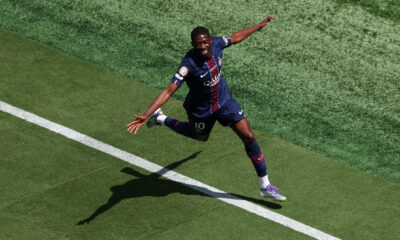
Ousmane Dembele: 2025 Ballon d’Or winner
This year’s Ballon d’Or was shaped by a player who, for so long, was the unfinished idea. He was a freakish two-footed talent with fragile rhythm, who provided flashes that never quite joined up. Under Luis Enrique, the edges finally met.
The role shift towards the middle of PSG’s attack did not dilute Dembele’s chaos; it focused it. When the music swelled loudest — in the knockouts, under floodlights, with the world peering in — Dembele kept showing up.
If the Ballon d’Or has an unwritten rule, it is that the Champions League remains the vote’s north star. Dembele’s signature is scrawled across PSG’s remarkable run to European glory. There were the match-winners at Anfield and the Emirates, the whirl of dribbles that bent defensive lines out of shape, the creation numbers that belonged to a classic winger and the shot volume of a centre-forward. He hit a blistering run of scoring form between January and March, then, when the goals cooled towards the campaign, he morphed into the provider who threaded the last pass on the biggest stage. Voters remember how a season ends. Dembele finished in bold.
The story mattered too. Awards are decided by people, and people are drawn to arcs. Dembele’s is redemption without sentimentality: a once-mercurial wide man becoming a relentless, disciplined match-tilter; the gifted kid talked about for what he might be becoming the adult judged on what he did. Within a PSG side heavy on standouts — Vitinha running games, Fabian Ruiz humming through midfields, Achraf Hakimi exploding down the right — Dembele felt like the difference in the moments that televised seasons are cut around. Being the face of the champions rarely hurts.
None of this diminishes Yamal. If anything, it clarifies how high the bar had to be to beat him. At 18 (17 throughout the 2024/25 season) he operated not as garnish but as Barcelona’s reference point, the player who made Hansi Flick’s attack breathe from the right and between the lines. The end product was not a teenager’s trickle but a senior’s stream, married to a dribbling output that turned full-backs into traffic cones and big nights into canvases. He dragged gravity towards him in La Liga, in the Copa del Rey, and again in Europe until Inter finally drew a line in the sand in the semi-finals. Had Barcelona climbed one step higher, the conversation might have tilted the other way.
Process matters, and this one is simple enough to sketch. One journalist from each of FIFA’s top 100 nations selects a top ten from a 30-man shortlist, guided officially by individual performance and team honours, and unofficially by memory, narrative and the weight of trophies lifted in June. The judging window — from August 1, 2024 to July 13, 2025 — happens to flatter a season like Dembele’s: a steady opening, a fire-breathing spring, and a finale set to the Champions League anthem.

Paris Saint-Germain’s Ousmane Dembele is the 2025 Ballon d’Or winner
Why Ousmane Dembele won the 2025 Ballon d’Or
Dembele’s case is built on three pillars.
First, the Champions League run that asked for decisive actions and kept getting them. He supplied finishing and creation at volume, and he did it against opponents who shape how ballots are cast: Liverpool, Arsenal, Inter.
Second, the tactical evolution that turned a highlights-winger into a complete forward. He pressed with purpose, operated more centrally without losing his ability to break lines off either foot, and became the connective tissue of an attack that often looked unstoppable.
Third, the narrative of fulfilment. Voters are not immune to the satisfaction of seeing a talent long discussed finally delivered whole.
The case for Lamine Yamal
If there is a sense of injustice in some quarters, it is because Yamal did almost everything else.
Yamal — who won this year’s Kopa Trophy by a landslide — was Barcelona’s best idea and their outlet when games tightened, creator-in-chief and reliable finisher, the player managers targeted and could rarely mute.
He made a domestic treble feel inevitable and a Champions League final feel plausible until it wasn’t. He did it with numbers any 25-year-old would frame — and with the courage of a teenager who plays as if pressure is simply oxygen.
Yamal did not lose the Ballon d’Or so much as collide with a season that ticked every historic box on the other side.

Barcelona teenager Lamine Yamal finished second in the 2025 vote
How the vote tilted
The award still bends towards Europe’s summit, towards players who define spring rather than autumn, and towards stories that feel like closure. Dembele offered all three. Yamal offered two and a promise. Football rarely keeps promises, but this one looks different.
If Barcelona — who are currently rated as 6/1 joint favourites in the outright Champions League betting — convert progression into the biggest cup next time, the ribbon probably changes colour.
Monday night belonged to Dembele, and fairly so. But the future has Yamal’s name written all over it.

 Savinho to Spurs: City Must Now Decide on £60m Sale
- Meslier Joins Arsenal on a Free as Kepa Prepares to Exit
- Forest Demand Guaranteed British Record as City’s £120m Anderson Bid Looms
- Rashford Wants Barca or Bayern — Spurs Are Just the Fallback Option
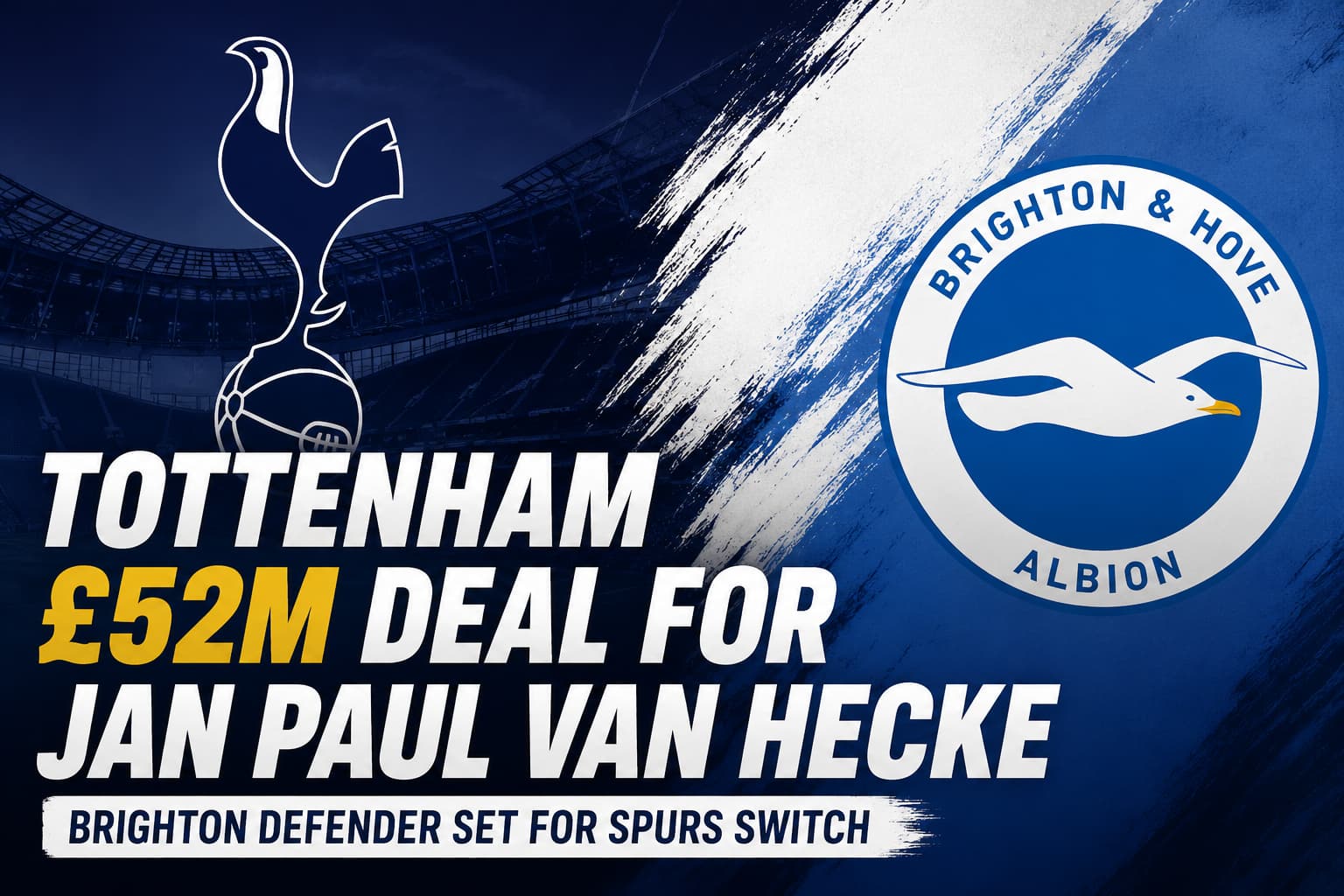
- Tottenham Agree £52m Fixed Fee for Brighton’s Van Hecke
- Tottenham Threaten to Hijack Summerville as United’s Window Unravels
- Liverpool and United Circle Juventus’s Thuram at €50m
- Arsenal agree personal terms with Manu Koné in €45m Roma deal
- Man United Target Summerville and Fernandes in £130m West Ham Double Deal
- Nico Paz Set to Stay at Como as Real Madrid Step Back