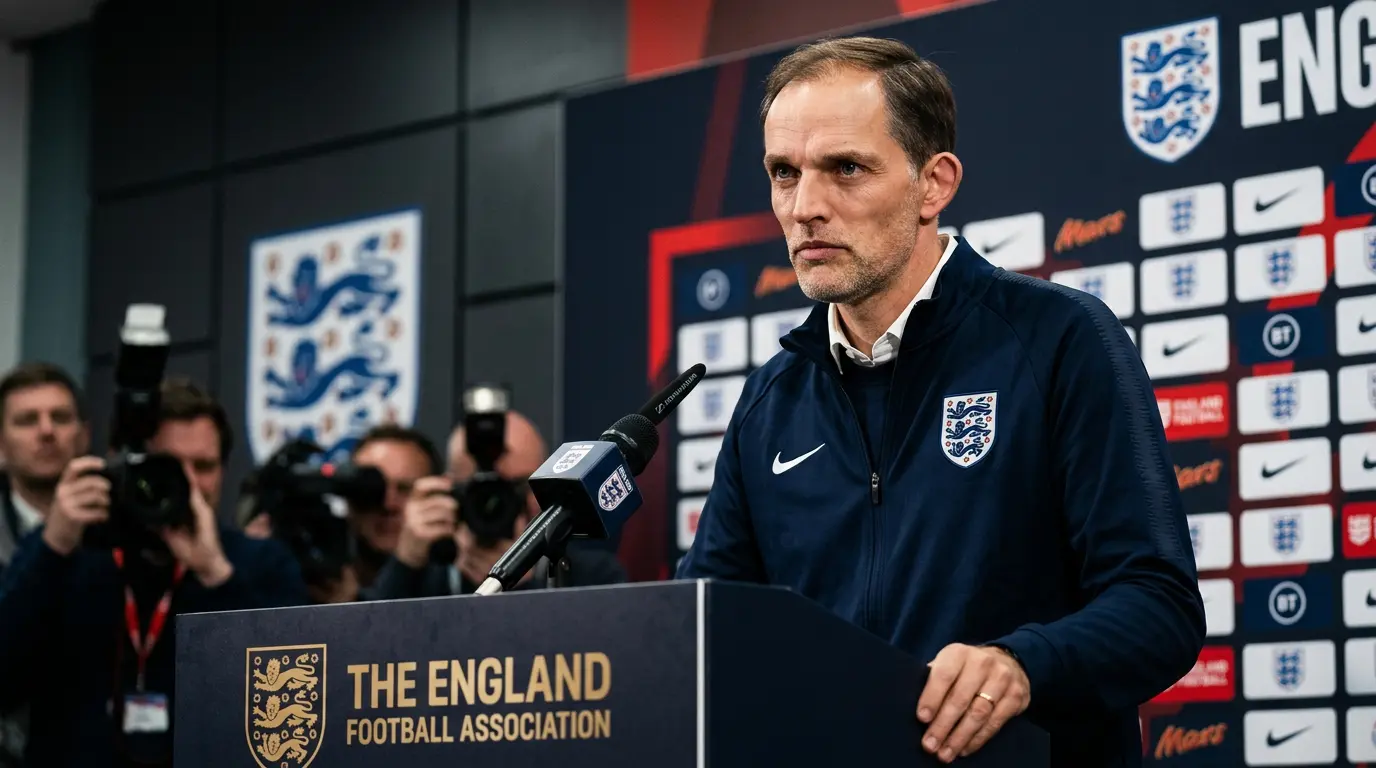
In the 65th minute of Thursday’s 2-0 win over Serbia at Wembley, England manager Thomas Tuchel made a quadruple substitution.
Among the players to leave was captain Harry Kane, England’s all-time leading goalscorer and arguably the best No 9 in world football.
Marcus Rashford also departed. With no other traditional No 9 on the bench, Tuchel replaced Kane with Phil Foden — a change that was far from like-for-like.
Foden has played as a false nine before, with Pep Guardiola using him there regularly before Erling Haaland’s arrival reshaped Manchester City’s attack. Tuchel, like Guardiola, values tactical flexibility, and having Foden as a different option is useful.
But he is an alternative, not an obvious understudy. England still lack a convincing replacement for Kane.
Or do they?
Jude Bellingham also came on midway through the second half. The Real Madrid star had dominated the pre-match headlines after news of his omission from the starting XI broke earlier in the day.
Why did Thomas Tuchel bench Jude Bellingham against Serbia?
Bellingham being dropped to the bench for Thursday’s game was not an isolated incident. It was the latest indication that Tuchel is unconvinced the Real Madrid midfielder fits naturally into England’s current structure.
Tuchel has made it clear that in England’s 4-2-3-1 — with a single No 10 behind Kane and specialist wingers on either side — only one creative central attacking midfielder can start.
“At the moment, if we keep the structure, they cannot all play,” Tuchel said this week of Kane, Foden and Bellingham. “They can but not in the structure, not for the balance that we developed and not for the structure that comes also with wingers — who are like specialists in their positions.”
He then listed Bellingham, Morgan Rogers and Foden as the main No 10 contenders, as well as Cole Palmer and Morgan Gibbs-White. The message was clear: England have too many attacking midfielders and not enough places for them.
Bellingham had already been left out of the previous England squad entirely. His return did not guarantee anything, and Tuchel underlined that with another firm pre-match warning. “There is a lot of congruence in the No 10 position,” Tuchel said ominously, before adding: “There is the chance that we will not take everyone [to the World Cup].”
For a player who has long been considered undroppable, Bellingham now finds himself squeezed by the sheer volume of competition in England’s midfield.
There have also been suggestions of personality clashes between Tuchel and Bellingham. Tuchel was forced to apologise earlier this year for describing elements of Bellingham’s on-pitch “fire” as “repulsive” — a remark made in a radio interview the morning after England lost to Senegal in June.
Tuchel quickly clarified the comment, contacted Bellingham personally and insisted no criticism was intended.

Thomas Tuchel left Jude Bellingham out of England’s starting XI for Thursday’s 2-0 win over Serbia.
Did Phil Foden play well as a false 9?
Foden’s late cameo against Serbia on Thursday was lively and, at times, impressive. His sharp combination with Bellingham helped set up Eberechi Eze’s curling finish in the final minute — after Serbia’s search for an equaliser had left them overexposed.
But the role also exposed limitations. At one point, a long diagonal aimed into the striker’s zone sailed over Foden’s head, drawing a groan around Wembley. It was exactly the sort of ball Kane thrives on — bringing it under control, protecting it from defenders and laying it off for runners from midfield.
It was also the sort of ball Bellingham, with his size and aerial ability, may have been able to deal with. Foden can operate centrally in flashes, but he does not naturally occupy centre-backs or provide the physical focal point England rely on when Kane plays.
Tuchel has previously said that Foden is “between the nine or 10” in this England setup. That flexibility is great, but England still need something closer to a nine in case Kane becomes unavailable.
Why taking Jude Bellingham to the World Cup as a striker makes sense
If Tuchel cannot find a place for Bellingham as a No 10, his goalscoring form at Real Madrid suggests that repurposing him as England’s back-up No 9 just makes sense.
Many strikers would be very happy with Bellingham’s scoring numbers in Spain, where he has scored 30 goals in 67 La Liga games for Real Madrid. Bellingham — who finished 10 places behind England teammate Kane in the 2025 Ballon d’Or vote — has shown a striker’s instinct in the box by arriving late, drifting between centre-backs and finishing with composure.
Furthermore, five of Bellingham’s goals have been headers, a reminder of the physical attributes that make him such a threat — and distinguish him over Foden.
Though he is primarily an attacking midfielder in Spain, Bellingham has been deployed as the highest player in Madrid’s system on multiple occasions. Many of his goals resemble the work of an established centre-forward, coming from near-post darts, rebounds in traffic, sharp movements across defenders, and first-time finishes from cut-backs.
What Thomas Tuchel said about Jude Bellingham after England beat Serbia
Tuchel admitted that Bellingham was less prepared for his tactics than some of his teammates, having missed out on a place in England’s last two squads.
Speaking after Thursday’s Wembley win, Tuchel explained: “It would be unfair for Jude to try to figure everything out because we changed our way of pressing in the last two camps. Declan [Rice], Morgan and Harry did it already in three-four matches together.
“I figured they could adapt a bit quicker. Once we saw the formation we could give clear instructions to Phil and Jude and bring them from the bench.”
Tuchel’s words suggest much has changed since Bellingham last started for the Three Lions back in June. It could well be that adapting his own positional identity may be the key to securing a place in England’s World Cup squad next year.

 Saliba’s Back Injury: No Surgery, No Return Date as Arsenal Plan Around Absence
- Real Madrid Close to Personal Terms With Rodri as City Talks Loom
- Emery Reunion Drives Villa’s Move for £65m-Rated Jackson
- PSG’s £120m-Plus Barcola Demand Puts FSG’s Ambition to the Test
- Savinho to Spurs: Why the £60m Man City Deal Looks Done
- Inter Eye Cristian Romero But €50m Fee and Wages Create Major Hurdles
- Trafford the Only Keeper Target as Leeds Stall on Charles and Chase Brandt
- Argentina Face FIFA Investigation After World Cup Final Confrontations
- Guimarães Bid Incoming and Williams Opens Door in Arsenal’s £167m Push
- Ferran Torres Transfer: Liverpool and PSG Compete for Barcelona Forward