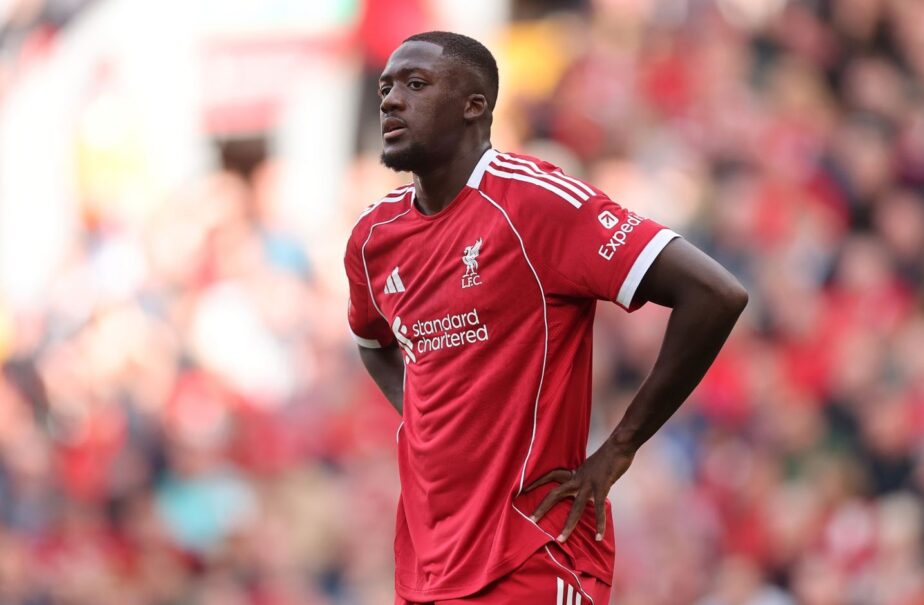
Ibrahima Konaté has opened up about his battle with depression following the death of Diogo Jota – and the honesty of what he has said deserves every bit of attention it is getting.
Speaking to France Inter radio and the Independent, the 27-year-old Liverpool centre-back described a season in which personal grief and professional criticism combined to devastating effect.
This is not just a footballer discussing a difficult campaign. This is a man describing a mental health crisis that unfolded in plain sight – and that almost nobody around him knew about.
Konaté on the Darkest Period of His Career
Konaté was unsparing in how he described what depression actually felt like. “Depression is personal, it’s deep inside you,” he said. “It devastated me. I didn’t have any interest in anything else at that point.”
Let that land. This is not a player saying he found a season tough or felt the pressure of expectation. This is a player describing a complete loss of drive and purpose – the defining symptom of depression laid out in plain, devastating terms.
What makes the interview even more significant is that Konaté did not ask for sympathy or use the disclosure as an excuse.
He stressed that “you can suffer from depression in football too; there’s no need to be ashamed” – directly challenging the lazy idea that high salaries insulate players from mental illness.
He also admitted he initially “kept it all to myself,” choosing instead to keep playing because “the team needed me more than ever.”
The man was carrying all of this privately, turning up, and getting criticised for his performances. That context changes everything.
The Shadow That Jota’s Death Cast Over Anfield
To understand why this hit Konaté so hard, you need the full picture. Diogo Jota and his brother André Silva were killed in a car crash in July, just days before Liverpool’s pre-season camp.
The squad had not even gathered properly when the news broke. There was no easing into grief – it arrived at the very start of the season and never really left.
Then, in January, Konaté’s father Hamady passed away after spending several weeks in hospital. One loss compounding another across the full stretch of the season.
The dressing room at Anfield has been carrying this weight collectively, and Konaté’s situation reflects something deeper about the emotional state inside that club that results and league tables simply cannot capture.
\p>Jota was a teammate, a presence in the building every day. His death was not an abstract tragedy reported from a distance. For the players, it was personal. Konaté is telling us exactly how personal.
More Than a Footballer Talking
What Konaté has done here is genuinely brave, and it is worth being direct about why. Elite footballers do not typically discuss depression publicly.
The culture around professional sport – the expectation of resilience, the fear of being seen as weak, the awareness that admissions like this invite scrutiny – makes silence the default. Konaté chose the opposite.
His message to anyone struggling is simple and practical: “When you’re feeling down or something’s going on, you need to talk to those around you… it can help you and do you good.”
Not a campaign slogan. Not a wellness hashtag. Just a man who learned the hard way that suffering alone is not strength.
The fact that he was being used as a scapegoat by sections of the fanbase and pundits during this period – while privately in the grip of depression and grief – makes those criticisms sting in retrospect.
We rarely have the full picture when we pass judgment on a footballer’s form. Konaté is a sharp reminder of that.
What Comes Next for Konaté and This Liverpool Side
Konaté will leave Liverpool this summer when his contract expires, with strong reports linking him to Real Madrid.
It is a departure that carries more weight now – not just as a transfer story, but as the end of a chapter defined by loss and resilience in equal measure.
Liverpool’s broader picture this summer is complicated, and losing a defender of Konaté’s quality creates real problems. But that is a conversation for another day.
Today, the story is simpler than any transfer. A footballer went through something harrowing, kept showing up, and then decided to speak about it honestly. That matters far more than any fee.

 Trafford the Only Keeper Target as Leeds Stall on Charles and Chase Brandt
- Argentina Face FIFA Investigation After World Cup Final Confrontations
- Guimarães Bid Incoming and Williams Opens Door in Arsenal’s £167m Push
- Ferran Torres Transfer: Liverpool and PSG Compete for Barcelona Forward
- Napoli Push to Swap Vicario for Milinkovic-Savic in No-Fee Summer Deal
- Savinho to Spurs: City Must Now Decide on £60m Sale
- Meslier Joins Arsenal on a Free as Kepa Prepares to Exit
- Forest Demand Guaranteed British Record as City’s £120m Anderson Bid Looms
- Rashford Wants Barca or Bayern — Spurs Are Just the Fallback Option
- Tottenham Agree £52m Fixed Fee for Brighton’s Van Hecke