The 2026 FIFA World Cup will be unprecedented in scale. For the first time, 48 nations will compete at the finals, with matches spread across the United States, Mexico and Canada.
The expansion is designed to open football’s greatest stage to more countries than ever before. Supporters hail it as a step towards a truly global tournament, while critics warn it could mean bloated groups, lopsided contests and less drama.
As qualification for the 2026 World Cup continues, FootballBlog.co.uk takes a look at how this tournament will be different, which nations might benefit from the new format and whether bigger will be better.
New FIFA World Cup format
The 2022 World Cup in Qatar featured 32 teams, 64 matches in total, and the champions Argentina played seven games to lift the trophy.
In 2026, the expansion to 48 nations will increase the tournament to 104 matches — 40 more than the last edition, while the winners will have to play eight matches.
The group stage will also look very different. Instead of eight groups of four, there will be 12 groups of four. The top two in each group will progress, along with the eight best third-placed sides. That means 32 teams — two-thirds of the entrants — will reach the knockout rounds.
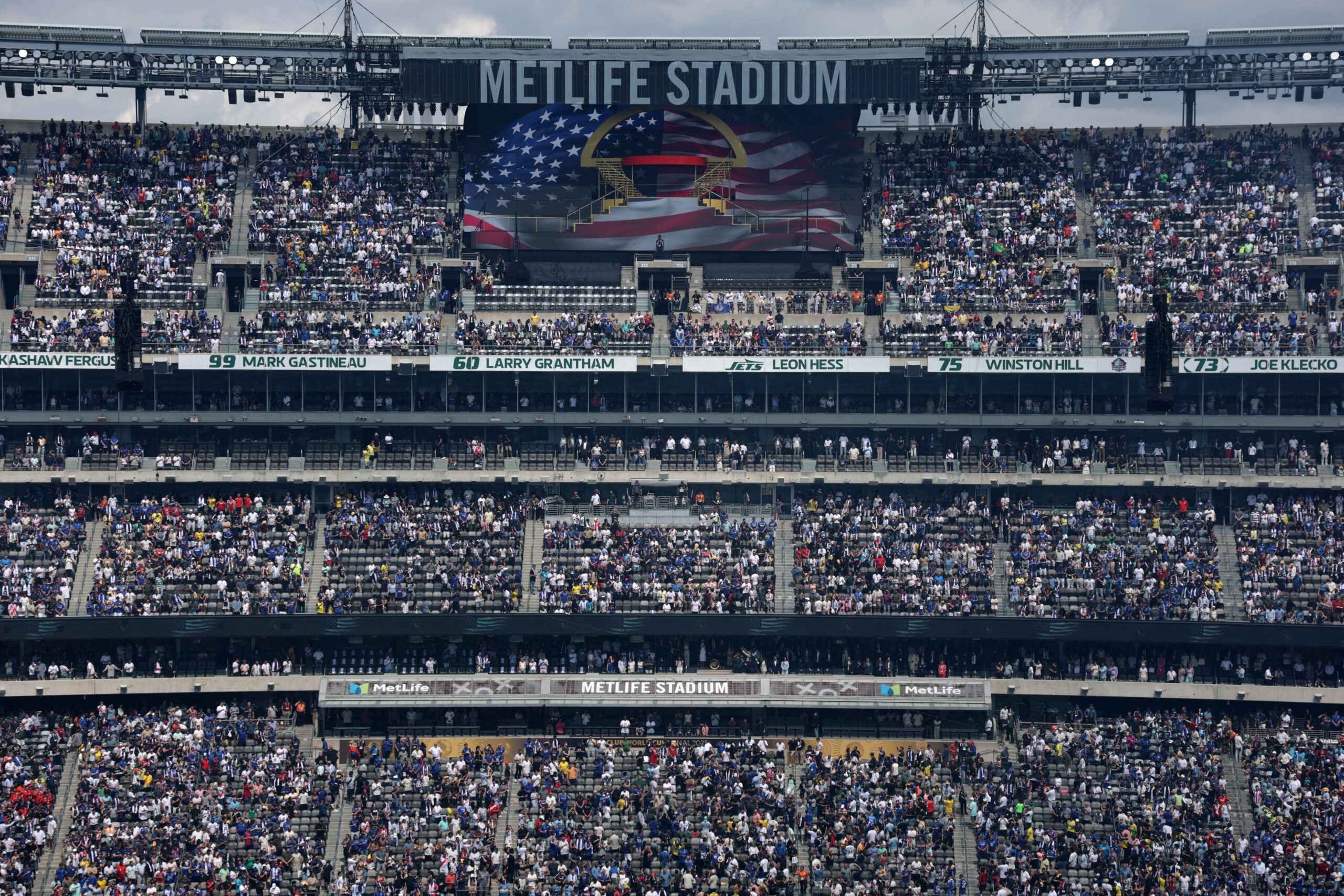
The 2026 FIFA World Cup will feature 104 matches, with the final taking place at New Jersey’s MetLife Stadium
2026 World Cup qualification: Where the 16 extra places will go
The 16 new slots created by the increase from 32 nations will be spread across FIFA’s six confederations, albeit not evenly.
Africa (CAF) and Asia (AFC) are the biggest winners.
In Asia, the number of automatic qualifiers has doubled from four to eight, with a ninth team potentially making it via the play-offs. Meanwhile, Africa’s allocation has nearly doubled, rising from five to nine automatic places, plus a possible one more via the play-offs.
Europe (UEFA) will now send 16 nations instead of 13, giving mid-ranking sides a better chance. The allocation for South America (CONMEBOL) has grown from four to six automatic qualifiers, with a seventh possible through the play-offs.
North and Central America (CONCACAF) have been given a significant boost too, with six guaranteed slots, including the three host nations — USA, Mexico and Canada — who have qualified automatically.
Finally, Oceania (OFC), long denied a direct path, finally has one guaranteed place, with another side heading to the play-offs.
World Cup 2026 qualification summary
A total of 206 nations entered the race to reach the 2026 World Cup. At the time of writing, 80 have already been eliminated, with 112 still fighting for places.
- Asia (AFC): 8 direct qualification places + 1 play-off place (46 teams entered qualifying)
- Africa (CAF): 9 direct qualification places + 1 play-off (53 teams entered qualifying)
- North & Central America (CONCACAF): 3 automatically-qualified host nations + 3 direct qualification places + 2 play-off places (32 teams entered qualifying)
- South America (CONMEBOL): 6 direct qualification places + 1 play-off place (10 teams entered qualifying)
- Oceania (OFC): 1 direct qualification place + 1 play-off (11 teams entered qualifying)
- Europe (UEFA): 16 direct qualification places (54 started)
How the play-offs work
The intercontinental play-offs will almost act as a dress rehearsal for the finals when they take place in North America in March 2026.
Six teams will compete in two mini tournaments, with the final two World Cup places up for grabs.
The fixtures will be based on the FIFA World Rankings. The four lower-ranked teams will contest semi-finals, while the higher-ranked nations will receive a bye to one of the two finals.
Which teams have already qualified for the 2026 World Cup?
At the time of writing, 17 nations are assured of their place at the 2026 World Cup:
Hosts: United States, Mexico, Canada
Asia (AFC): Japan, Iran, Uzbekistan, South Korea, Jordan, Australia
Oceania (OFC): New Zealand
South America (CONMEBOL): Argentina, Brazil, Ecuador, Uruguay, Colombia, Paraguay
Africa (CAF): Morocco
Who might the new faces be?
We are guaranteed to see at least two debutants in 2026, with Uzbekistan and Jordan having already sealed qualification through the Asian route. Both nations have been close in the past but now finally get the chance to appear on football’s grandest stage.
Africa looks likely to send at least one debutant too. Cape Verde are currently top of their qualifying group and on course for a historic first appearance at the finals, while Mali remain firmly in contention in Group I and could yet make their own long-awaited debut. Burkina Faso, also chasing a first World Cup finals appearance, look well set to reach March’s play-offs.
In North and Central America, the expanded format has given several countries a realistic chance of making history. Suriname, Curaçao, Nicaragua, St Kitts & Nevis and Guatemala are all still in the running. None of them have ever reached the finals before, but whether one of them can emerge from the final group stage remains to be seen.
South America might provide its own historic moment if Venezuela qualify, although they will have to get there via the play-off route. Venezuela are the only CONMEBOL member never to appear at a World Cup and they currently sit seventh with one round of South American qualifying remaining.
Even Oceania could add a new name, with New Caledonia heading to the intercontinental play-offs. However, it would be a big shock to see the French territory win two play-off games, considering their world ranking of 152.
While many new faces dream of making history at the 2026 World Cup, one of the game’s greatest old faces may not be there at all, with Lionel Messi recently admitting he is unsure whether he will have played his final match for Argentina by the time the tournament begins.

Debutants Jordan and Uzbekistan sealed their qualification for the 2026 World Cup back in June
Will a bigger World Cup be better?
The 2026 expansion ensures that fans from more countries will see their flags on football’s greatest stage, bringing pride and excitement to millions who have never experienced it before. For nations such as Uzbekistan and Jordan, simply being there will be a moment of history.
More games also mean more tickets and more chances for supporters to experience a World Cup match in person, whether they follow giants like Brazil and Argentina or debutants breaking new ground.
On the pitch, the new format is likely to bring more goals, especially in the group stage when the gulf between the traditional powers and the lowest-ranked qualifiers will be wider than ever. For some, that will add to the spectacle, while for others one-sided matches could prove uninspiring.
Where the format could really change the dynamics is in the fight for qualification. With 12 groups of four and the eight best third-placed teams also advancing, it will be possible for a side to lose their opening two matches and still retain a mathematical chance of sneaking through. That means fewer “dead rubbers” for the minnows — the third group game will often carry significance, even for those who start slowly.
But that same safety net could erode some of the jeopardy that has long defined the group phase. In past tournaments, a heavyweight suffering one early slip could face elimination in their final group match, creating some of the most dramatic nights in World Cup history. Under the new structure, a Brazil, France or Germany could stumble twice and still find a route into the knockouts. The sense of peril — so often the fuel for iconic shocks — risks being diluted.
What remains to be seen is whether bigger also proves to be better — or if the magic of the World Cup is harder to preserve in an expanded format.

 Tottenham Agree £52m Fixed Fee for Brighton’s Van Hecke
- Tottenham Threaten to Hijack Summerville as United’s Window Unravels
- Liverpool and United Circle Juventus’s Thuram at €50m
- Arsenal agree personal terms with Manu Koné in €45m Roma deal
- Man United Target Summerville and Fernandes in £130m West Ham Double Deal
- Nico Paz Set to Stay at Como as Real Madrid Step Back
- Liverpool Chase £112m Diomande in Three-Way Battle
- Rashford Open to United Stay But Club Want Him Gone
- Liverpool Eye Surprise Midfielder as Mac Allister Future Wavers
- Chelsea Weighing £50m Move for Real Madrid’s Carreras