I was among the crowd at Nizhny Novgorod Stadium in June 2018 when Panama scored their first-ever World Cup goal.
The fact that the Central American side were still losing 6-1 to England despite Felipe Baloy’s historic strike seemed to matter very little to the Panamanian supporters around me.
It was a huge moment for a nation that had never previously qualified for a World Cup — arguably one of the most memorable scenes of the entire 2018 tournament.
Fast forward to next year. The 2026 World Cup — expanded from 32 teams to 48 — will welcome at least three debutant nations. That alone should guarantee a few magical “firsts”.
But beyond that, will this influx of fresh blood make football’s most famous tournament better… or worse?
Which Nations Will Make Their World Cup Debuts in 2026?
Three nations have already confirmed qualification for the first time in their history:
- Cape Verde – the second-smallest country ever to reach a men’s World Cup
- Uzbekistan – long considered Asia’s strongest nation never to qualify
- Jordan – finalists at the 2023 Asian Cup
Qatar will also appear through sporting merit for the first time, having previously qualified only as hosts.
With more slots available to each region than ever before, the list of possible new faces is even longer. Kosovo, Suriname, New Caledonia, Curaçao, Gabon and several others are still alive in qualifying.

Cape Verde fans pictured celebrating in Brockton, Massachusetts after the African nation qualified for the 2026 World Cup (Marc Vasconcellos/The Enterprise / USA TODAY NETWORK via Imagn Images)
Why will there be so many new teams at the 2026 World Cup?
The answer, simply, is expansion. The jump from 32 to 48 teams has transformed the World Cup qualification landscape.
Confederations such as CAF (Africa), AFC (Asia) and CONCACAF (North America, Central America and the Caribbean) have been given unprecedented access, creating space for nations who have spent years hovering just outside the elite.
But the expansion has also produced a hugely unwieldy group stage. The first 17 days of the tournament will involve 12 groups of four teams, 72 matches and vast amounts of travel. Only 16 sides will be eliminated at this stage, with eight third-placed teams also progressing. It will likely be possible to draw all three group games and still reach the last 32.
Critics have not been shy about their concerns. Many European club executives insist the old 32-team structure was “perfect”, while others argue the new format looks bloated, messy and designed more for political reward than sporting integrity. Even the logistics of navigating three host nations — the United States, Canada and Mexico — have created headaches for federations trying to plan training bases.
Whether the expansion ultimately strengthens or weakens the tournament remains to be seen, but its impact on global representation is undeniable.
Are people underestimating Cape Verde, Uzbekistan and Jordan?
On paper, the rankings suggest these teams should struggle. Cape Verde sit outside the top 70; Jordan are in the mid-60s; and Uzbekistan hover just inside the top 60. That sounds like a cluster of outsiders destined to make up the numbers.
The reality is more nuanced.
Cape Verde have quietly developed into one of Africa’s toughest tournament sides. They were unbeaten at AFCON 2023, with South Africa needing a penalty shootout to get past them in the quarter-finals. Their squad, largely built around Portuguese-based players, is cohesive and tactically mature — qualities that often translate well to World Cup group stages.
Uzbekistan, meanwhile, have been the nearly-men of Asian football for two decades. Their youth teams regularly perform well on the global stage, and the senior side is now benefitting from a promising generation that blends European-based talent with players emerging from the Uzbekistan Super League. Their route to qualification — Uzbekistan lost just once in 16 games, despite facing Iran four times — suggests they are arriving not as passengers, but as a nation finally fulfilling long-held potential.
Jordan’s appearance may surprise casual observers, but their recent rise is remarkable. In 2023 they reached the Asian Cup final, beating Iraq and Son Heung-min’s South Korea along the way. They are tactically disciplined, physically resilient and have become one of the region’s most awkward opponents.
None of the debutants are among the favourites — the probability of any of them winning the World Cup is seemingly close to zero — but all three are significantly stronger than their reputations imply.
What history tells us about World Cup debutants
History shows that first-timers often bring energy, chaos and unforgettable moments.
Senegal beating defending champions France in 2002 remains one of the great World Cup shocks. Nigeria’s explosive debut in 1994 — when they topped a group containing Argentina — showed how quickly newcomers can alter expectations.
Ireland reached the quarter-finals in 1990 and Croatia finished third at their first tournament as an independent nation in 1998.
Across men’s and women’s football, the pattern repeats, with debutants often punching above their perceived weight.
Even at the expanded 2023 Women’s World Cup, where many feared mismatches, Morocco reached the knockouts ahead of Germany, while Portugal pushed the United States to the brink of early elimination.
The lesson is clear. While some new teams struggle, many enrich the tournament, from a sporting perspective, not just a cultural one. World Cup debutants often surprise, disrupt, and can deliver exciting narratives that established powers struggle to match.
Will the 2026 World Cup deliver more mismatches, or more shocks?
Probably both — but perhaps fewer mismatches than expected.
Several nations still in contention to qualify for 2026 are ranked well outside the top 100. History suggests that teams arriving from such positions often find the pace overwhelming. North Korea were ranked 105th when they made it to the 2010 World Cup, where they lost all three group games, including a 7-0 thrashing at the hands of Portugal.
But the expanded format, combined with the unpredictable nature of international football, also creates perfect conditions for shocks. Travel demands across North America, condensed rest periods, extreme heat and the unusual competitive structure could all level the playing field a little. Bigger nations may be fatigued; smaller ones may be fresher, unified and tactically focused.
Recent tournaments have shown that reputation counts for little. At Qatar 2022, Germany (four titles), Uruguay (two titles), Belgium and Mexico all failed to reach the knockouts. Upsets are no longer outliers; they are almost a defining feature of the modern World Cup.
Expect thrashings, yes. But expect surprises too — possibly more than ever.
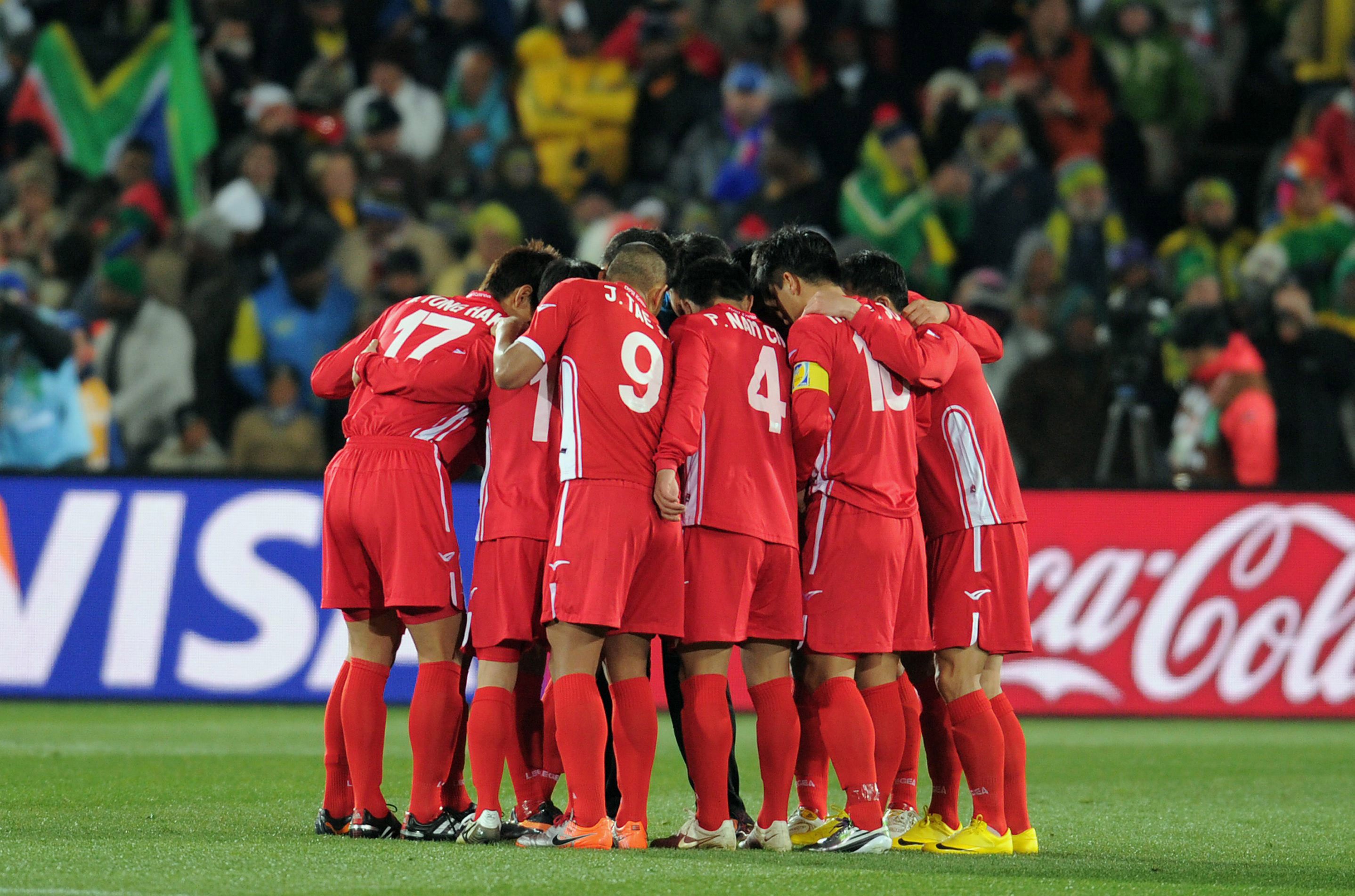
North Korea qualified for the 2010 World Cup despite being 105th in the FIFA rankings (Witters Sport-Imagn Images)
The magic of firsts at the World Cup
Part of the appeal of expansion is emotional rather than sporting. Global football is filled with outstanding stories that rarely make it to the world stage. Cape Verde facing Portugal — their former colonial rulers — would carry enormous cultural significance. Kosovo, should they qualify, would arrive just a decade after playing their first competitive international match. Jordan’s qualification has already provided a rare moment of national celebration at a time when the country has endured difficult years.
These are the kinds of narratives that give the early stages of a World Cup their identity. The new teams may not all last long, but their presence alone will create moments that supporters remember long after the favourites lift the trophy.
Will the new World Cup format make the tournament better or worse?
This is where optimism meets resistance. Many players, managers and executives have warned that expansion risks diluting the quality of the opening phase and exhausting both players and spectators.
Jurgen Klopp summed up the mood earlier this year when he criticised FIFA’s wider approach to tournament expansion. Calling the new Club World Cup format “the worst idea ever implemented in football”, he warned that the sport was being stretched to breaking point. “It’s too many games,” he said. “There’s no real recovery for those involved, neither physically nor mentally.”
Many fear the same about the 2026 World Cup. With 104 matches spread across vast distances, the tournament could struggle to maintain energy and cohesion. Some critics have compared modern football’s calendar to Disney’s approach to content — more, more, more — until the sense of occasion begins to disappear.
And yet, there is another side to this. Football is not only for its traditional powerhouses. A broader, more global tournament has value beyond pure competition. It creates new markets, new identities, new supporters and new stories. Even if the format is flawed, the representation is meaningful.
Whether the 2026 World Cup is better or worse may depend on what you value most: sporting purity, or football’s ability to reflect the entire world.

 Chelsea Make Formal Contact With Free-Agent Striker Ahead of Summer Move
- Enzo Fernandez ready to sign five-year Real Madrid deal in Chelsea twist
- Federico Chiesa warns he could leave Liverpool without Iraola assurances
- Liverpool Pay the Price as Real Madrid’s Ibrahima Konate Package Is Revealed
- Chelsea and Man City locked in battle for Zadok Yohanna as Newcastle fall behind
- Tottenham target Harry Wilson after standout season with 19 goal involvements
- Liverpool Star Opens Up on Depression After Diogo Jota Loss in Emotional Interview
- Roma set to receive more money from Riccardo Calafiori’s Arsenal transfer
- Zielinski appears to confirm Dumfries to Real Madrid and drops Lewandowski Serie A hint
- Juventus Shortlist Six Strikers to Replace Dusan Vlahovic