Brighton owner Tony Bloom’s £9.8m investment in Hearts could transform the Scottish Premiership.
For decades, Scottish football has lived under the weight of the Old Firm. Celtic and Rangers have dominated almost every major domestic honour for more than 35 years, sharing titles, trophies, and TV money in an almost closed loop of success.
Between huge fanbases, commercial pull, and Champions League revenues, the Glasgow giants operate on budgets several times larger than any rival, and the idea of a genuine third force has often felt more romantic than realistic.
But now, there’s a sense that change might actually be coming from the capital.
Who Is Tony Bloom?
In the summer of 2025, Tony Bloom completed a £9.86 million investment for a 29% stake in Heart of Midlothian, quietly becoming one of the most intriguing developments in recent Scottish football. The Brighton chairman isn’t known for vanity projects and his track record speaks for itself.
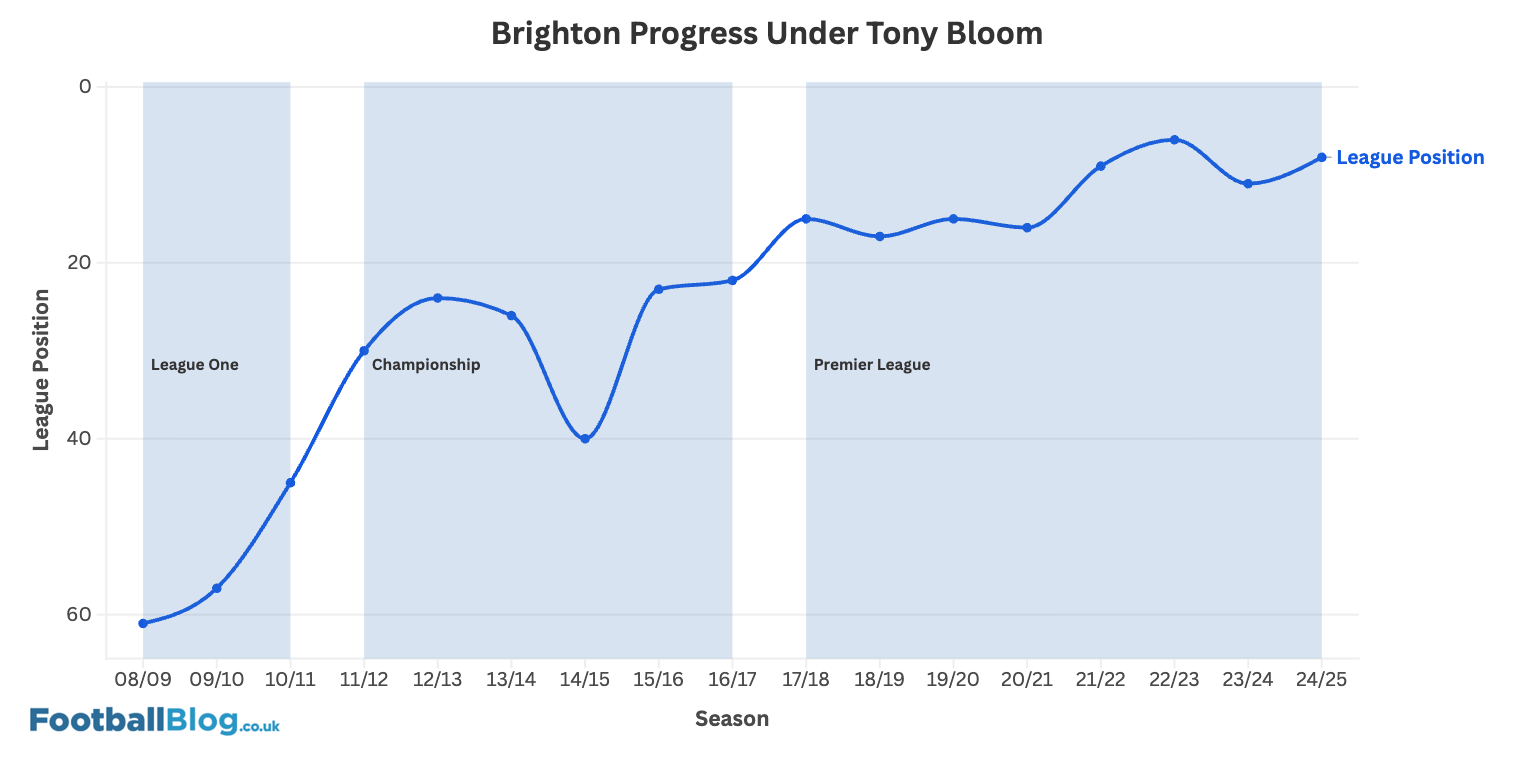
In England, Bloom took a side from League One and, over time, turned it into a stable Premier League club with European pedigree. In Belgium, he helped Royale Union Saint-Gilloise rise from the second tier to the Champions League. And now, his sustainable and relentlessly analytical data-driven approach is now being exported to Tynecastle.
“We need the tournament to be more competitive,” Bloom said. “That’s what Hearts can bring to the table, and that can only be good for Scottish football.”
Tony Bloom Data Analytics
Bloom’s involvement brings more than money. Hearts have become the first Scottish club to partner with Jamestown Analytics, a sports intelligence firm that evolved out of Bloom’s Starlizard betting operation.
The company’s algorithms, scouting metrics and player-profiling tools have transformed Brighton’s transfer strategy, who are notorious for identifying undervalued talent before rivals. The same system is now informing decisions in Edinburgh, giving head coach Derek McInnes a competitive edge in recruitment and opposition analysis.
This means Hearts’ signings are increasingly guided by data as well as the “eye test”. In a market where every pound counts, that precision can be so crucial, particularly in Scotland.
The Saint-Gilloise Blueprint: How Bloom Built a Giant-Killer
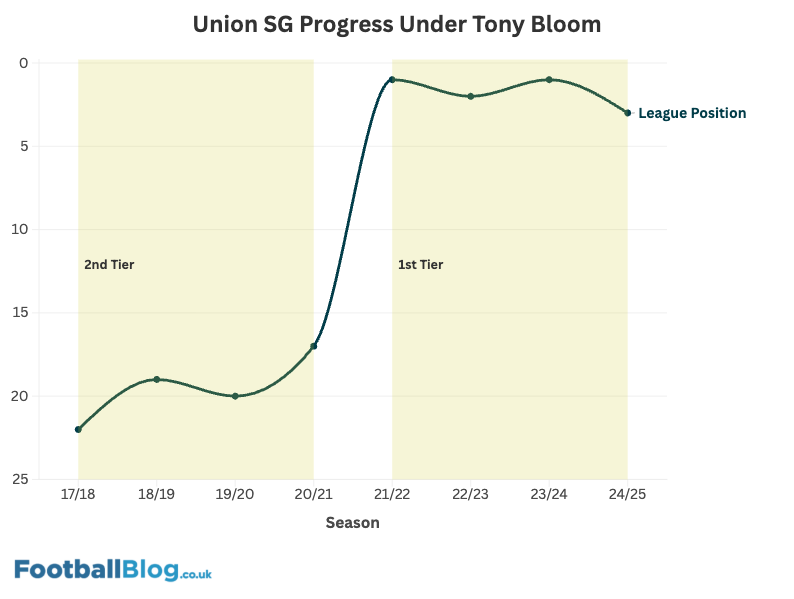
When Bloom talks about breaking duopolies, it’s not just theory – he’s gone out and done it. In Belgium, Union SG went from second-tier obscurity to national champions within four years of his arrival.
When Bloom and his business partner Alex Muzio took over the Brussels club in 2018, Union were part-timers playing to small crowds in a stadium falling apart. They came in with a clear plan to use analytics to uncover talent other clubs ignored. Jamestown Analytics became their secret weapon, identifying undervalued players from overlooked leagues.
Striker Deniz Undav, midfielder Teddy Teuma, and defender Christian Burgess all arrived for modest fees or free transfers. Within three seasons, Union were back in Belgium’s top flight; two years later, they were European regulars.
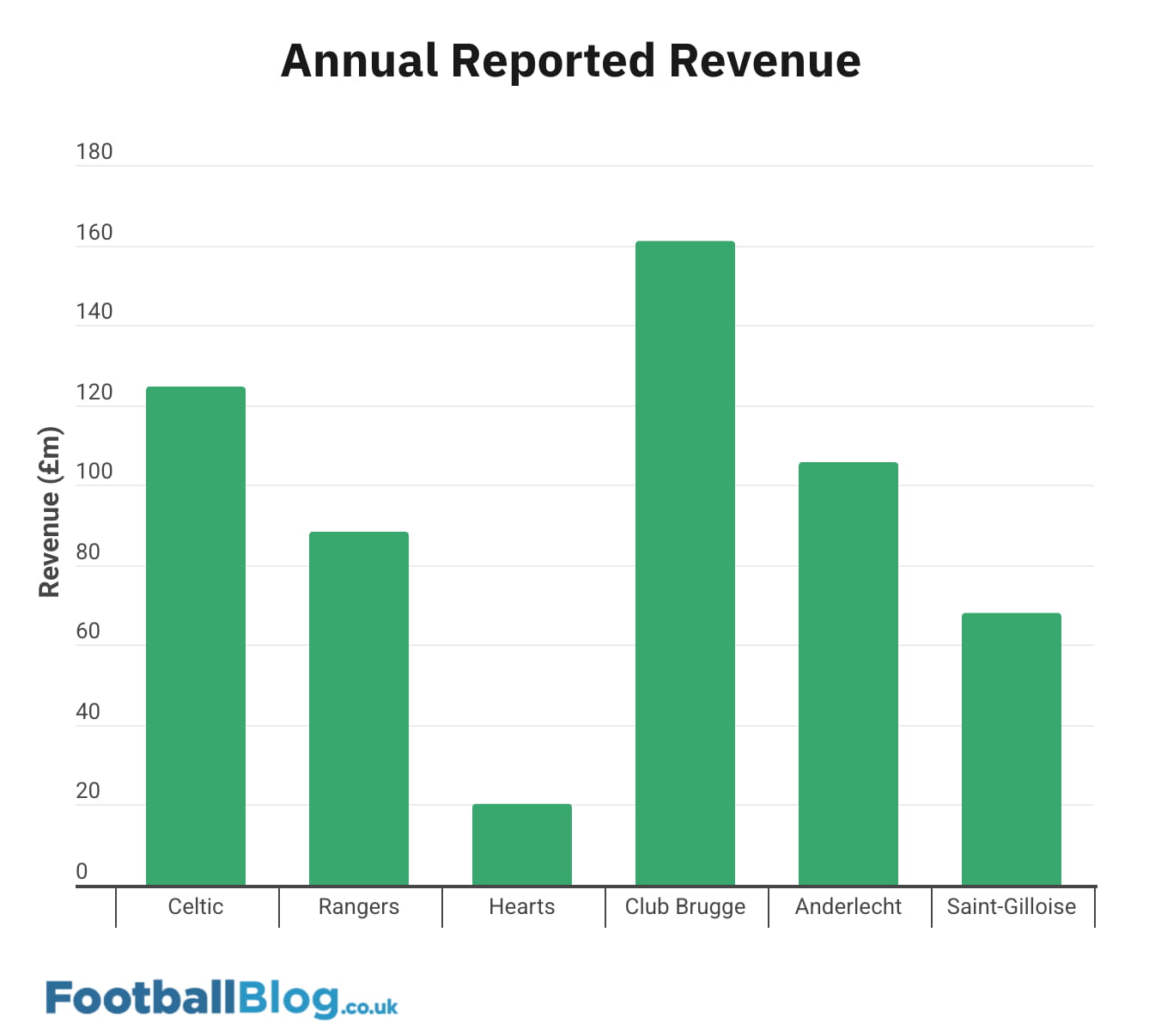
In 2025, they did the unthinkable: they won the Belgian title – their first since before the Second World War. The traditional giants, Anderlecht and Club Brugge, were out-thought and out-planned by a club whose wage bill was a fraction of theirs.
Their recruitment success was staggering. Victor Boniface, bought for £5 million, was sold for £18 million to Bayer Leverkusen. Cameron Puertas left for £14 million after costing a fraction of that. The club made over £30 million in transfer profits, reinvested smartly, and kept climbing.
Just as crucially, Bloom and Muzio built a culture that balanced data with people.“We don’t just sign 20 players and hope it works,” Muzio explained. “We mix leaders with learners, starters with squad players. Otherwise, you end up with chaos.”
Union’s story wasn’t fuelled by billionaire excess but by insight and discipline, which is exactly the formula Bloom wants to bring to Edinburgh.
Hearts Form
So far, the early returns are promising. At the time of writing – after eight games – Hearts are undefeated and sitting five points clear at the top of the Scottish Premiership.
McInnes’ side have found an effective balance between tactical discipline and attacking bravery – the sort of formula that made Brighton thrive under Graham Potter, Roberto De Zerbi, and now Fabian Hurzeler.
A late winner in the Edinburgh derby and their dismantling of Kilmarnock in October summed up the new mentality in this Hearts side.
Even David Weir, Brighton’s former technical director and someone who knows Bloom better than most, believes Hearts’ trajectory is serious.
“Tony will invest, and he’ll continue to invest,” Weir said. “They have made a good start. If that start continues into January, then they will go again and really push it, because he sees an opportunity.
“By setting targets and being aggressive in that regard, he sets the bar really high, and he puts pressure on people to achieve that… You definitely wouldn’t bet against him.”
Hearts Transfer Business and Bloom’s Early Footprints
If the past summer’s transfer window was any indication, Tony Bloom’s influence at Tynecastle is already being felt. The club’s recruitment showed a clear shift towards the analytical, targeted and opportunistic approach that has defined his success elsewhere.
For much of the window, Hearts shopped in quieter markets – Iceland, Estonia, Norway’s second tier and Italy’s lower leagues – signing players who fit Jamestown Analytics’ profile: affordable, high-upside, and often overlooked.
Then came the headline deal. The club-record £1.7 million signing of Ageu from Santa Clara, flagged months earlier by Jamestown’s models, was a statement. When his valuation dropped late in the summer, Bloom gave the green light to act.
| Player | Age | Signed From | Fee (£) |
|---|---|---|---|
| Ageu | 23 | Santa Clara | 1.70m |
| Claudio Braga | 25 | Aalesund | 450k |
| Elton Kabangu | 27 | Union SG | 260k |
| Sabah Kerjota | 23 | Sambenedettese | 130k |
| Alexander Schwolow | 33 | Union Berlin | free |
| Christian Borchgrevink | 26 | Valerenga | free |
| Alexandros Kyziridis | 24 | Michalovce | free |
| Oisin McEntee | 24 | Walsall | free |
| Pierre Landry Kabore | 24 | JK Trans Narva | undisc. |
| Tomas Bent Magnusson | 22 | Valur | undisc. |
| Stuart Findlay | 29 | Oxford United | loan |
The Brazilian midfielder, praised by Derek McInnes as a “game-changer”, was exactly the type of technically progressive signing Hearts have long struggled to attract.
Elsewhere, the likes of Elton Kabangu, Claudio Braga and Sabah Kerjota fit the same mould – players recruited from unconventional leagues with resale potential rather than short-term fixes. That shift in profile mirrors the blueprint Bloom used at Union SG: smart, data-informed deals that have resale value.
McInnes’s fingerprints remain visible too. His push for experience and physical presence saw Stuart Findlay added to the squad, a move that balanced the manager’s instinct with analytics.
For the first time in years, Hearts’ transfer window felt cohesive. Not every signing will succeed, but the thinking behind them is clear and Bloom’s footprint on the club can already be seen.
Can Hearts Really Break The Celtic-Rangers Duopoly?
Breaking the Celtic-Rangers dupoly is far from straightforward. Even with Bloom’s millions, the financial gap remains enormous. But Hearts’ model doesn’t rely on outspending the Glasgow clubs – it’s about out-thinking them.
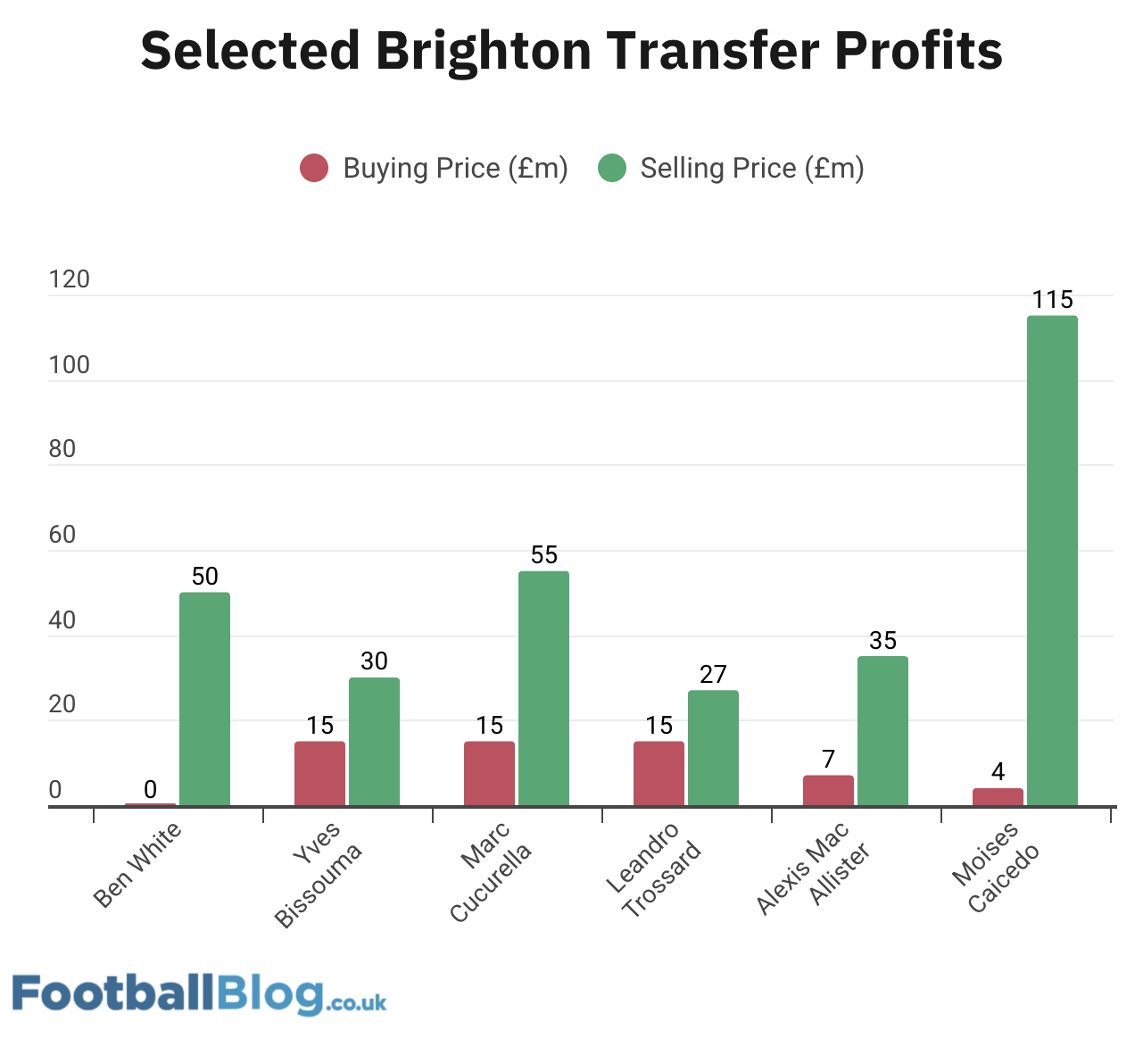
At Brighton, Tony Bloom’s model uncovered undervalued players like Moises Caicedo and Alexis Mac Allister through meticulous data work and smart scouting. Hearts are now applying similar principles, using analytics to identify talent suited to the Scottish game and the club’s style. In a league where resources are tight, that efficiency could prove decisive.
Stability in the dugout is another crucial ingredient. Bloom’s success at Brighton was built on patience, allowing managers to implement long-term ideas rather than chasing short-term fixes. Derek McInnes is being afforded the same trust at Tynecastle, giving the team time to develop a clear identity and consistency – qualities often missing outside the Old Firm.
Off the pitch, financial sustainability is key. Competing with Glasgow’s giants will never be about spending power, but about creating steady growth. Regular European football can generate both income and profile, while a smart transfer strategy can help fund future reinvestment.
And finally, there’s the psychological hurdle. For too long, Scottish clubs have viewed matches against Celtic or Rangers as damage limitation. Changing that mentality and having genuine belief that those teams can be beaten home or away is vital. Once Hearts start playing like challengers rather than hopefuls, the balance of power might begin to shift.
Scotland UEFA Coefficient
Bloom has also spoken repeatedly about Scotland’s falling UEFA coefficient, which now forces the Premiership champions to play multiple qualifiers just to reach the Champions League group stages.
“The fact that the Scottish coefficient has reduced so much that the champions have to win two games to qualify for the group stage of the Champions League is a terrible situation for Scottish football,” Bloom stated.
“I’m very confident that will change because I can’t speak for other clubs, but Hearts will be a force,” he explained. “And when we get into Europe, we’ll be winning games, and we will help lift that coefficient. It takes time, the way the system works.”
Why This Time Might Be Different
Hearts have flirted with breaking the Old Firm grip before, most notably under George Burley in 2005-06, but financial instability and ownership changes always got in the way.
This time, the infrastructure is sturdier. The Foundation of Hearts supporters’ group remains central to the club’s identity, while Bloom’s investment adds ambition and expertise without eroding that local ownership ethos.
Bloom’s track record and proven patience are equally vital. Brighton didn’t rise overnight; they grew through long-term planning, careful investment and ruthless consistency. If that same DNA takes hold at Tynecastle, Hearts may yet rewrite the Scottish football hierarchy.
Why Hearts’ Rise Benefits Scottish Football
If Hearts can genuinely compete, the ripple effects could transform the entire Scottish Premiership. A genuine title race would boost TV viewership, sponsorships, and global interest.
It would also force Celtic and Rangers to evolve, improving their own recruitment, facilities, and youth development in response.
Hearts may not yet have the resources to dominate Scotland, but they have something just as valuable: a clear plan. With Tony Bloom’s analytical nous, Derek McInnes’ steady hand, and a city that’s ready to believe again, the Jambos could soon turn ambition into reality.

 Savinho to Spurs: City Must Now Decide on £60m Sale
- Meslier Joins Arsenal on a Free as Kepa Prepares to Exit
- Forest Demand Guaranteed British Record as City’s £120m Anderson Bid Looms
- Rashford Wants Barca or Bayern — Spurs Are Just the Fallback Option
- Tottenham Agree £52m Fixed Fee for Brighton’s Van Hecke
- Tottenham Threaten to Hijack Summerville as United’s Window Unravels
- Liverpool and United Circle Juventus’s Thuram at €50m
- Arsenal agree personal terms with Manu Koné in €45m Roma deal
- Man United Target Summerville and Fernandes in £130m West Ham Double Deal
- Nico Paz Set to Stay at Como as Real Madrid Step Back