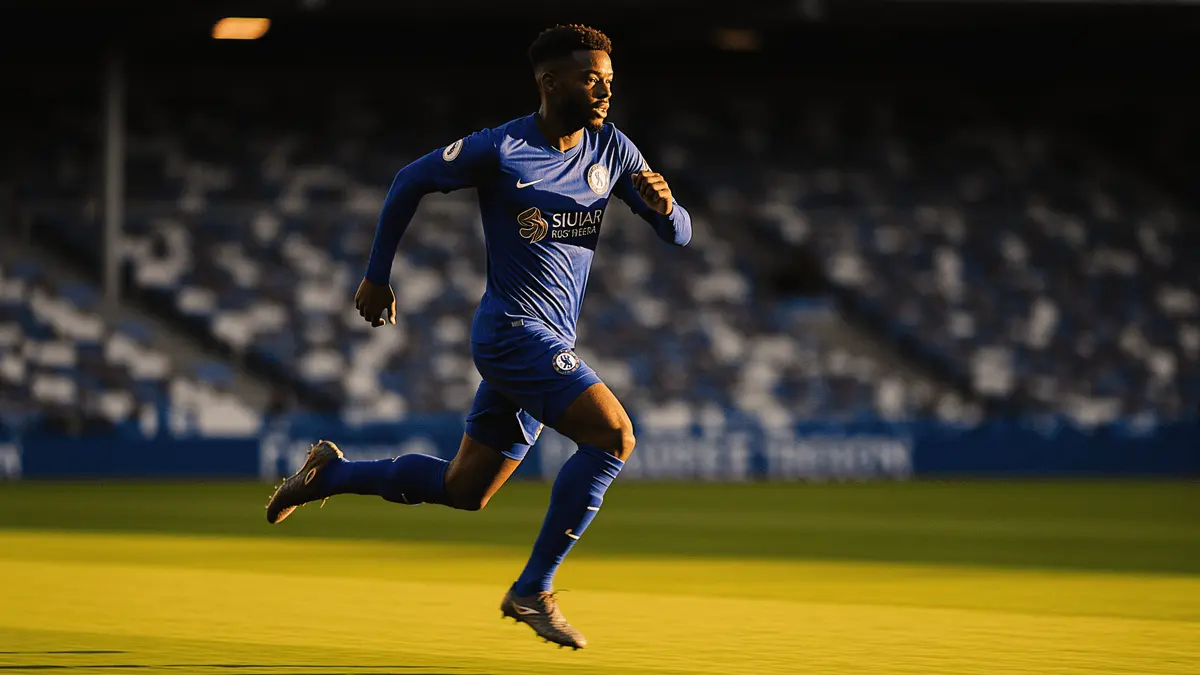
What Chelsea fans can expect from Liam Rosenior – tactical style, pressing, build-up play and how his Strasbourg model fits Stamford Bridge.
Chelsea’s decision to appoint Liam Rosenior as head coach has raised eyebrows among fans. But BlueCo are confident they’re hiring the right man for the job.
With Enzo Maresca departing largely due to off-field friction rather than results, the Chelsea ownership have been able to move quickly and decisively by turning to Strasbourg, the other pillar of their multi-club model.
This is an advantage of BlueCo’s multi-club model. Rather than entering a prolonged recruitment process, Chelsea already had a coach who they know well, working within the same sporting framework, using similar tactical principles, and managing players developed with Stamford Bridge in mind.
It’s essentially a promotion for Rosenior, who fits neatly into the ecosystem that BlueCo is about.
Is Liam Rosenior ready for the Chelsea job?
There’s no doubt that Rosenior is a promising coach whose career has progressed steadily rather than spectacularly.
After retiring as a player, he cut his teeth in development roles at Brighton and Derby County, working under different structures and briefly stepping into senior responsibility at Derby during a turbulent period.
Hull City then gave him his first true head coach role, where he stabilised the club and pushed them close to the Championship play-offs.
His move to Strasbourg in 2024 gave him his first job abroad, managing the youngest squad in Europe’s top five leagues, and doing so under a clear ownership-led vision centred on youth development.
Strasbourg’s average age is just over 21 this season, even younger than Chelsea’s already youthful squad.
That experience is key. Rosenior is already accustomed to high turnover, managing inexperienced players, and aligning day-to-day coaching with a longer-term development pathway.
Those demands will not disappear at Chelsea – if anything, they will intensify.
Liam Rosenior’s Tactics: In possession
In possession, Rosenior’s Strasbourg look somewhat similar to Chelsea under Maresca. They consistently built into expansive 3-2-2-3 or 3-1-3-3 shapes, with full-backs stepping into midfield and attackers holding wide positions to stretch the pitch.
They were committed, almost religiously, to playing out from the goalkeeper.
Goal kicks were used as structured attacking opportunities, featuring rehearsed one-touch combinations designed to bait pressure and break lines cleanly.
This was one of Strasbourg’s clearest strengths, and an area where Chelsea have been less consistent this season.
However, there was a key difference. Strasbourg were slower in possession on average than Chelsea, preferring control and positional stability over open, end-to-end games.
That caution helped with chance quality – their xG per shot is among the best in Ligue 1 – but it also limited volume and occasionally left them short of goals.
Rosenior vs Maresca: Attacking differences
Strasbourg’s attacking output under Rosenior was steady, but not exactly electric.
They created fewer shots than most of their Ligue 1 rivals (15th for shots per 90), but those chances were typically high quality (1st for xG per shot), often funnelled towards a central striker like Joaquin Panichelli.
Artificial transitions – moments engineered through structure rather than chaos – are a recurring theme.
For Chelsea, this raises both optimism and questions. Improved deep build-up and cleaner progression could help unlock better chances for their forwards.
At the same time, Premier League opponents are more likely to defend in compact low blocks, reducing the effectiveness of slow circulation and forcing greater creativity in tight spaces.
Rosenior has shown a willingness to adapt, particularly against elite sides like PSG, where Strasbourg played more directly at times.
Whether he can consistently vary Chelsea’s attacking rhythm without losing control will be one of the defining challenges of his early months.
Pressing, defending and tactical flexibility under Rosenior
Out of possession, Rosenior has evolved since his early coaching days.
At the start of his Strasbourg tenure, the team’s aggressive, player-orientated pressing left them vulnerable to quick combinations and turnovers. Over time, that approach has softened.
Strasbourg increasingly alternate between pressing high and dropping into a more compact mid-block, especially against stronger opponents.
The emphasis went from constantly winning the ball high to restricting space, controlling zones, and reducing the quality of chances conceded.
This change coincided with a noticeable defensive improvement. Fewer cheap giveaways in build-up, better spacing in transition, and more pragmatic game-state management all played a role.
For Chelsea, who have often struggled with defensive balance, this adaptability could be key.
Is Rosenior a good fit for Chelsea?
One of the clearest reasons for Rosenior’s appointment is familiarity with BlueCo’s operating model.
He has already worked for 18 months within its constraints and priorities, managing shared assets such as Andrey Santos and Emmanuel Emegha, and preparing players for potential upward movement.
Notably, he has also previously worked with striker Liam Delap during his time at Hull City, and will be hoping to unlock him at Stamford Bridge.
When Rosenior arrives in London, he will become the latest link in a growing chain of player and staff movement between Strasbourg and Chelsea.
Certain members of Rosenior’s coaching staff at Strasbourg are also making the switch to Stamford Bridge with him.
With this continuity, tactical language, training concepts and expectations should translate quickly, even in the middle of a season with limited preparation time.
Just as importantly, BlueCo are confident they can avoid the off-field tensions that contributed to Maresca’s exit by appointing a coach they already know and trust.
It’s a big gamble, particularly giving such an inexperienced coach a six-year contract, but one that the club is confident in.

 Saliba’s Back Injury: No Surgery, No Return Date as Arsenal Plan Around Absence
- Real Madrid Close to Personal Terms With Rodri as City Talks Loom
- Emery Reunion Drives Villa’s Move for £65m-Rated Jackson
- PSG’s £120m-Plus Barcola Demand Puts FSG’s Ambition to the Test
- Savinho to Spurs: Why the £60m Man City Deal Looks Done
- Inter Eye Cristian Romero But €50m Fee and Wages Create Major Hurdles
- Trafford the Only Keeper Target as Leeds Stall on Charles and Chase Brandt
- Argentina Face FIFA Investigation After World Cup Final Confrontations
- Guimarães Bid Incoming and Williams Opens Door in Arsenal’s £167m Push
- Ferran Torres Transfer: Liverpool and PSG Compete for Barcelona Forward