Liverpool have been the worst team in the Premier League this season when it comes to set-pieces.
No Premier League side has conceded more goals from corners, free-kicks or throw-in situations than Arne Slot’s Reds in 2025/26, while they are the joint lowest scorers from set-plays.
Liverpool have conceded from corners in each of their last two Premier League games — firstly away to Spurs when Richarlison fired home following some penalty-box pinball, then against Wolves at Anfield when Santiago Bueno pounced on a rebound after Alisson had blocked Tolu Arokodare’s initial header.
In total, the Reds have shipped seven goals from corners in their first 18 Premier League games so far this term, with only West Ham conceding more.
Liverpool part ways with set-piece coach Aaron Briggs
Liverpool have moved swiftly to address their set-piece problems, confirming on Tuesday that set-piece coach Aaron Briggs has left the club with immediate effect.
A 66-word club statement read: “Liverpool FC can confirm Aaron Briggs has departed his role as set-piece coach of the men’s first team.
“Having joined the club in July 2024 – initially in the role of individual development coach – Briggs contributed to our Premier League title success last season as a member of Arne Slot’s backroom staff.
“He leaves with the appreciation and best wishes of everyone at the club.”
Set-piece responsibilities will now be absorbed by the remaining coaching staff.
Premier League goals from set-pieces in 2025/26 (penalties not included)
| Team | Scored | Conceded | Difference |
|---|---|---|---|
| Arsenal | 12 | 4 | 8 |
| Spurs | 9 | 2 | 7 |
| Man Utd | 13 | 8 | 5 |
| Sunderland | 8 | 3 | 5 |
| Chelsea | 11 | 7 | 4 |
| Leeds | 12 | 9 | 3 |
| Aston Villa | 9 | 7 | 2 |
| Everton | 6 | 4 | 2 |
| Brentford | 3 | 3 | 0 |
| Brighton | 6 | 6 | 0 |
| Fulham | 7 | 7 | 0 |
| Man City | 6 | 6 | 0 |
| Newcastle | 8 | 8 | 0 |
| C. Palace | 8 | 10 | -2 |
| Wolves | 3 | 5 | -2 |
| Burnley | 4 | 8 | -4 |
| West Ham | 6 | 11 | -5 |
| Bournemouth | 6 | 12 | -6 |
| Nott’m Forest | 4 | 12 | -8 |
| Liverpool | 3 | 12 | -9 |
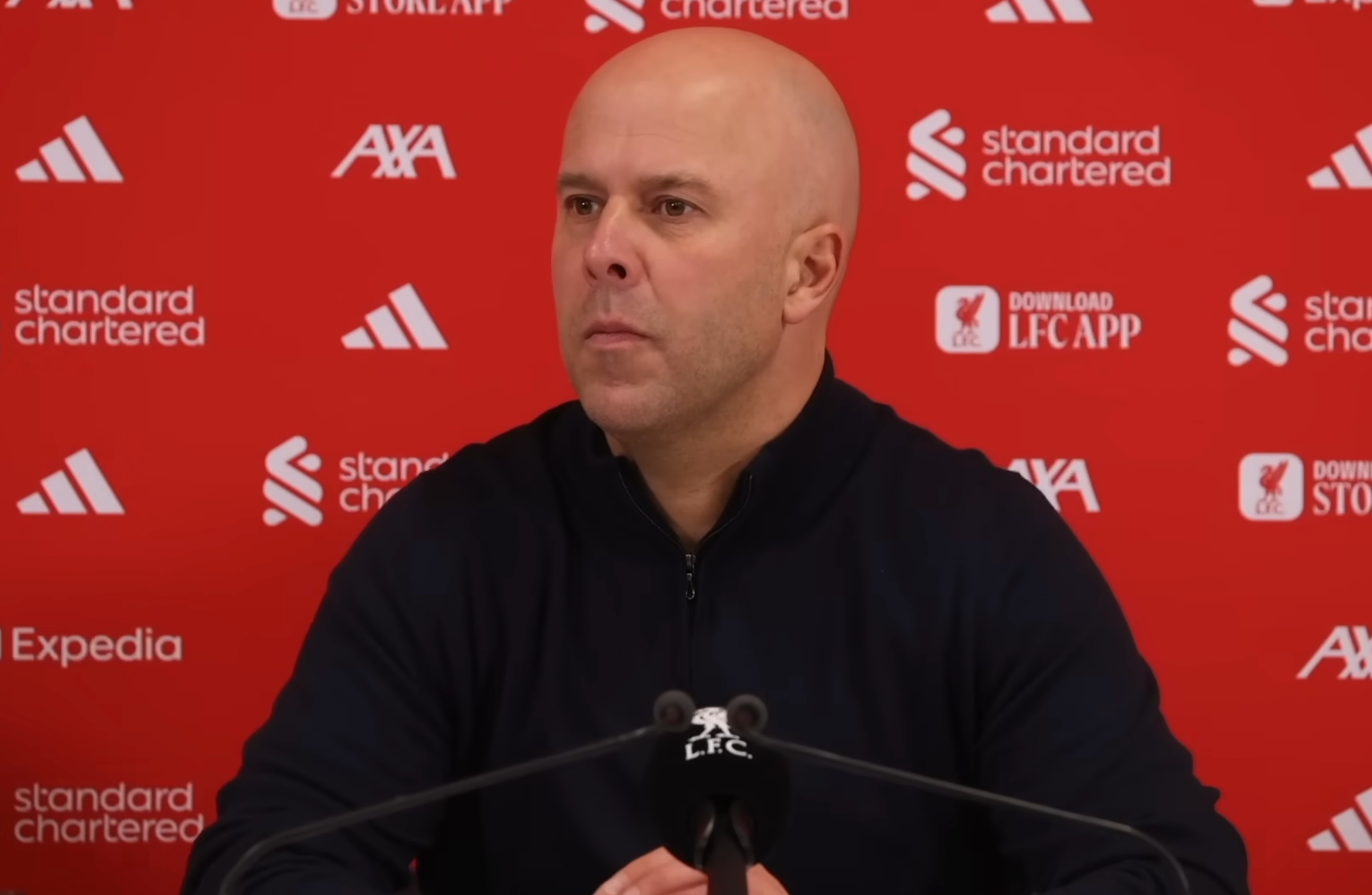
Arne Slot “so annoyed” by Liverpool’s set-piece problems
Liverpool manager Slot has spoken of his frustration at his team’s failure to master set-pieces this season.
Speaking after Liverpool beat nine-man Spurs 2-1 on December 20, Slot said: “I know the importance of it, it gets more and more, and that’s why we are so annoyed by our current record.
“It’s a big frustration we are where we are this season because when we were halfway through last season we had not conceded one set-piece [goal].
“It’s impossible to be top-four, top-five with our set-piece balance, let alone winning the league.”
Liverpool won the Premier League in Slot’s first season, but are 10 points behind leaders Arsenal after 18 rounds of fixtures this term.
Slot seems well aware of the data surrounding Liverpool’s set-piece problems. He added: “We are the only team in the top end of the table that has a negative set-piece balance. Not only are we negative, we are minus-eight and still on equal points with fourth (those numbers were correct when he said them).
“But if we are minus-eight — Chelsea is I think plus-eight [actually plus-four] and Arsenal and United are very high and if you look at that you could say how special it is we have as many points as we have if you have that set-piece balance.
“We all know why because in open chances created we are number one in the league.”
Why have Liverpool become so bad at set-pieces?
Liverpool’s problems are not simply about volume or aerial weakness — they are structural and situational.
The Reds have faced a fairly average number of corners compared to the rest of the division, yet their concession rate is among the worst. That alone points towards a deeper issue than simple defensive exposure.
Crucially, Liverpool are rarely beaten by the first contact. Their xG conceded from the first touch after a corner is just 2.46. Only Arsenal and Newcastle have a lower xG (both 2.06) from such situations in the Premier League this season.
It is generally not the initial delivery that catches Liverpool out, but the second phase.
Once the ball drops loose inside the penalty area — whether from a blocked header, a partial clearance or a recycled cross — Liverpool repeatedly fail to reset, react or mark runners. Opponents are finding space at the back post, attacking rebounds first, or simply being quicker to loose second balls.
Captain Virgil van Dijk himself alluded to this after the Wolves match, describing Liverpool’s failure to deal with second balls as a “killer”.
Several of the goals conceded this season have followed a similar pattern: Liverpool commit numbers to the initial duel, win or partially win it, then switch off.
This hybrid system — combining zonal markers with tight man-marking — appears to prevent clean headers but leaves Liverpool vulnerable once the structure breaks down.
Against Wolves, Santiago Bueno was able to react first despite multiple Liverpool defenders being in the box. Earlier in the season, Leeds and Manchester United exploited similar lapses by attacking space after the first phase had been disrupted.
It is not a question of personnel alone. Van Dijk and Ibrahima Konate remain dominant aerially, but the collective reaction behind them has been consistently poor.
How can Liverpool fix their set-piece problems?
Liverpool’s issues go well beyond bad luck, and solving them will require both tactical and philosophical shifts.
Firstly, there needs to be greater emphasis placed on second-phase responsibility. If the centre-backs are tasked with attacking the initial delivery, the surrounding players must be positioned — and mentally prepared — to win the next duel. Too often this season, Liverpool’s defenders have been flat-footed when the ball breaks loose.
Secondly, clarity is required in the marking scheme. The current blend of zonal and man-marking is preventing free headers but failing to account for rebounds, knockdowns and recycled crosses. A clearer allocation of space — particularly at the back post — would reduce the chaos that currently follows most defensive corners.
There is also a wider question around prioritisation. Slot has previously described set-pieces as an “add-on”, but modern Premier League football increasingly treats them as a core weapon. More than 40 per cent of Liverpool’s goals conceded this season have come from dead-ball situations, including penalties.
At the other end of the pitch, Liverpool’s lack of threat compounds the issue. While sides such as Arsenal, Manchester United and Chelsea consistently gain an edge from set-pieces, Liverpool are offering no counterbalance. That leaves no margin for error defensively.
Liverpool’s decision to part ways with set-piece coach Aaron Briggs this week suggests that attitude is already shifting behind the scenes.
Further personnel changes in January may help. Ibrahima Konate has faced widespread criticism this season, while a long-term replacement is needed for 34-year-old Van Dijk.
Liverpool admire Real Sociedad teenager Jon Martin. Marc Guehi is a major transfer target too. Liverpool face stiff competition for Guehi, with Bayern Munich prepared to offer higher wages.
But while new signings could help, Liverpool’s problems at set-pieces run deeper than individual defenders. Organisation, clarity of roles and, above all, concentration in second-phase situations must improve regardless of who is on the pitch.

 Saliba’s Back Injury: No Surgery, No Return Date as Arsenal Plan Around Absence
- Real Madrid Close to Personal Terms With Rodri as City Talks Loom
- Emery Reunion Drives Villa’s Move for £65m-Rated Jackson
- PSG’s £120m-Plus Barcola Demand Puts FSG’s Ambition to the Test
- Savinho to Spurs: Why the £60m Man City Deal Looks Done
- Inter Eye Cristian Romero But €50m Fee and Wages Create Major Hurdles
- Trafford the Only Keeper Target as Leeds Stall on Charles and Chase Brandt
- Argentina Face FIFA Investigation After World Cup Final Confrontations
- Guimarães Bid Incoming and Williams Opens Door in Arsenal’s £167m Push
- Ferran Torres Transfer: Liverpool and PSG Compete for Barcelona Forward