Not since 1985 has a team other than Celtic or Rangers been crowned champions of Scotland.
The last club to break the great Glasgow duopoly was Sir Alex Ferguson’s Aberdeen. Ferguson led Aberdeen to three Scottish Premier Division titles — in 1979/80, 1983/84 and 1984/85 — but it has been Old Firm all the way since then.
Heart of Midlothian hope to freshen things up this season, though. Despite being held to a 2-2 draw at St. Mirren on Wednesday night, Hearts are six points clear of Celtic at the top of the Scottish Premiership table.
Hearts lead Scottish Premiership after stunning start
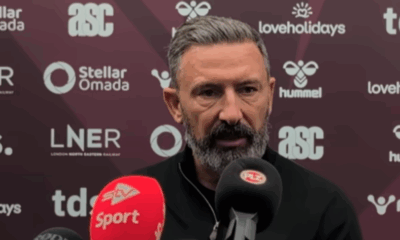
Manager Derek McInnes has overseen eight wins and two draws from his side’s first 10 league games of the season and their goal difference is seven higher than Celtic’s.
Despite this brilliant start and strong early lead, bookmakers do not view Hearts as title favourites, with Celtic still given an edge in the betting. Celtic are currently priced at 8/15, with Hearts 23/10.
Are Hearts being underestimated? Is too much being made of history? If so, what does history even tell us?
FootballBlog.co.uk takes a look at how Hearts’ brilliant start to the season compares against their previous title-winning campaign, while also looking at how close they have come to being crowned champions of Scotland since their last coronation in 1960.
Have Hearts ever been champions of Scotland?
Hearts have won Scotland’s top division four times. Their first title came in the 1894/95 season, while their most recent triumph was in 1959/60. Hearts were also the champions of Scotland in 1896/97 and 1957/58.
Only Celtic and Rangers have won more top-flight Scottish titles than Hearts, although they are way ahead with 55 each. Aberdeen and Hibernian have also won four titles each.
How close have Hearts come to winning the title since 1960?
Since winning their last top-flight title in 1960, Hearts have finished second five times.
Their most recent second-place finish came in 2005/06 when they ended up 17 points behind Celtic despite making a brilliant start. Hearts were nine points behind champions Rangers in 1991/92, after finishing 10 points short of Celtic in 1987/88. Celtic pipped Hearts to the title on goal difference in 1985/86. Hearts would have beaten Kilmarnock to the title in 1964/65 had goal difference been the tie-breaking method in that season. But that was the final season Scottish football used “goal average” instead.
Hearts and Kilmarnock finished level on 50 points, with Hearts having scored 90 goals and conceded 49. Kilmarnock had scored 62 goals and conceded 33. But instead of subtracting goals conceded from goals scored — which would have seen Hearts come out on top with 41 vs Kilmarnock’s 29 — the method of the time was to divide goals conceded from goals scored. As a result, Kilmarnock prevailed with a goal average of 1.879 vs Hearts’ 1.837.
Hearts’ second-place finishes since 1960
| Season | Pld | W | D | L | Champion | How far behind champs |
|---|---|---|---|---|---|---|
| 1964/65 | 34 | 22 | 6 | 6 | Kilmarnock | 0.042 on “goal average” |
| 1985/86 | 36 | 20 | 10 | 6 | Celtic | 3 goals on goal difference |
| 1987/88 | 44 | 23 | 16 | 5 | Celtic | 10 points |
| 1991/92 | 44 | 26 | 10 | 8 | Rangers | 9 points |
| 2005/06 | 38 | 22 | 8 | 8 | Celtic | 17 points |
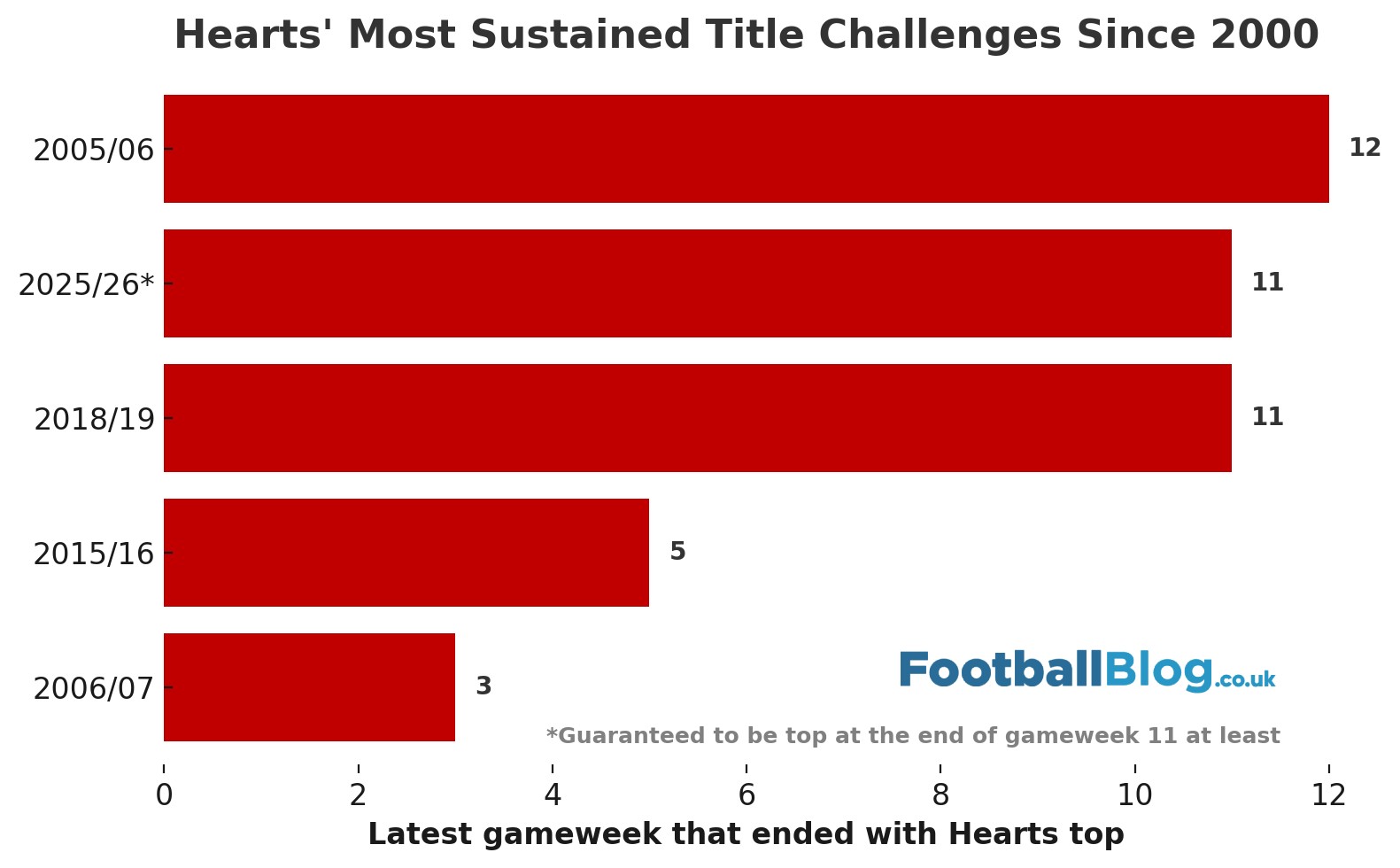
Hearts have topped the Scottish Premiership table at the end of at least one full gameweek in five different seasons this century.
Their latest lead during this period came in the 2005/06 campaign when they were top at the end of gameweek 12, before being overtaken by eventual champions Celtic in week 13. They eventually finished 17 points short of Celtic that season.
More recently, Hearts got to the end of gameweek 11 at the top of the pile in the 2018/19 campaign, before ultimately ending up in sixth place, 36 points below champions Celtic.
Hearts also topped the table briefly in 2006/07, when they peaked in gameweek three, and then again 2015/16, when their early lead lasted as far as gameweek five.
Seasons during which Hearts have spent time top of the Scottish Premiership this century
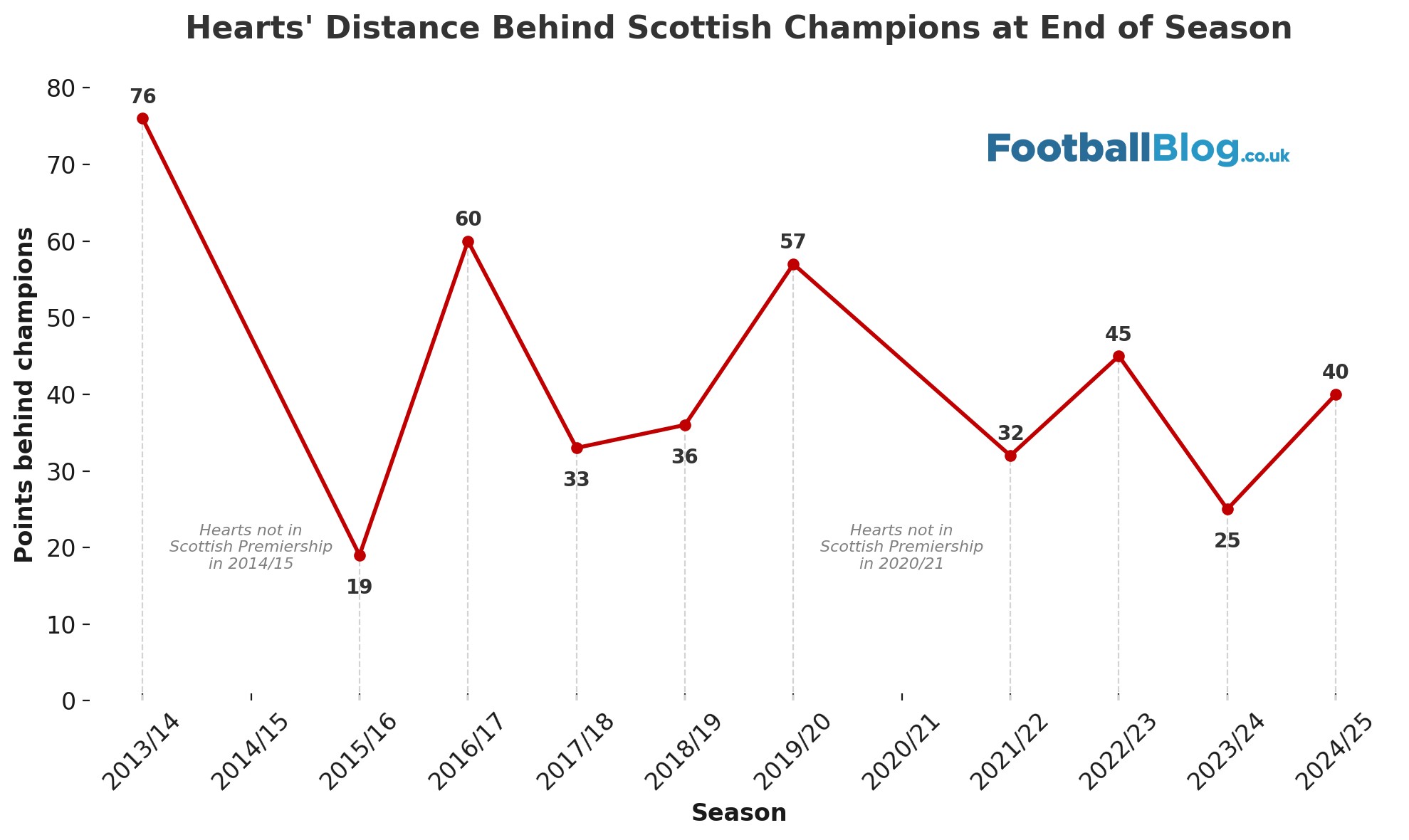
How far have Hearts been behind the Scottish Premiership champions in recent seasons?
The average distance between Hearts and the champions of Scotland in their last 10 top-flight seasons has been 42.30 points.
Hearts were relegated in two of those 10 seasons, while they also finished third on three occasions. In the three seasons they placed third, Hearts finished an average of 25.33 points below the champions.
Back to the present day — and to a Hearts team who have started the 2025/26 season in stunning form, sparking hope of a more sustained title bid.
McInnes’s men have already built a six-point cushion over Celtic, matching the best Hearts side of the 21st century through ten matches. Their points return, goals scored, and defensive record are all better than at the same stage of 2005/06, and they’ve led the Premiership for longer than in 2018/19, when that bright start faded fast.
Have Hearts ever started a season this well before?
This season’s eight wins and two draws from their first 10 league matches does not quite equal the best start Hearts have ever made to a top-flight campaign.
In their first ever title-winning campaign, the 1894/95 season, Hearts kicked off with 11 straight wins, before losing to Clyde in Game No 12. Back then though, the Scottish First Division season was just 18 gameweeks long. Hearts ended the campaign with 15 wins, one draw and two losses.
When did Hearts last start a season with 10 games unbeaten?
This season may not be the best start any Hearts team has made, but it is the joint best this century. In 2005/06, under the management of George Burley, Hearts had the exact same record at this stage of the season, after winning their first eight league matches and drawing the next two.
Hearts led the table up to and including until the end of gameweek 12 in 2005/06, before falling behind Celtic after a 2-0 derby defeat by Hibernian in late October.
Why Hearts failed to win the title after superb start in 2005/06
In 2005/06, Hearts looked destined to finally end the Old Firm’s stranglehold on Scottish football. Under George Burley, they opened the campaign with eight straight league wins and ten games unbeaten, including a 1-0 victory over Rangers. With a settled core of Scottish internationals — Craig Gordon, Steven Pressley, Paul Hartley and Andy Webster — alongside clever foreign signings like Rudi Skacel and Takis Fyssas, they were fast, fearless and united.
Then, everything changed. Barely three months into the season, Burley was sensationally sacked on the morning of a league match against Dunfermline. The official line was that his departure came by “mutual consent” after “irreconcilable differences” with the board. But supporters were stunned. Hearts were top of the league, unbeaten, and playing some of their best football in decades.
Rumours soon swirled about clashes with new owner Vladimir Romanov, who had recently completed his takeover of the club. It was reported that Romanov had started to interfere with team matters, even signing players without Burley’s approval. Whatever the truth, Burley was gone — and so, effectively, was Hearts’ title dream.
Chief executive Phil Anderton and chairman George Foulkes both resigned in protest within days, deepening the sense of chaos. By early November, Romanov’s son had taken over as chairman and Graham Rix had been appointed as the new manager — a controversial choice that immediately split the fanbase.
A promising season derailed by interference and instability
Results inevitably dipped. Rix struggled to replicate the intensity and cohesion that Burley had built. Players began to express frustration at Romanov’s increasing control, with reports that team selections and substitutions were dictated from above.
Hearts still finished second and lifted the 2006 Scottish Cup under Rix’s replacement, Valdas Ivanauskas — but it was a triumph tinged with regret. They had come closer to a league title than any non-Old Firm club in a generation, only for internal chaos to derail them.
Years later, former captain Steven Pressley reflected on how exhausting that period became for the players. “More than any other time, I was the one controlling the dressing room,” he recalled. “Players would come to me rather than the manager. It became draining.”
Pressley would later lead a player revolt in October 2006, publicly criticising the owner’s behaviour. It effectively ended his Hearts career — but history has been kind to his stance.
Looking back, that 2005/06 campaign remains one of the great “what if” stories in Scottish football. Hearts were top after 12 gameweeks and unbeaten until November, but they ultimately finished 17 points behind Celtic. The difference was perhaps not talent or belief, but turmoil. Romanov’s meddling cost the club its best shot at the title since 1960.
For many Hearts supporters, that season symbolises both hope and heartbreak — a reminder that brilliance on the pitch can be undone by dysfunction off it.
Will this season be any different? Will Hearts win the Scottish Premiership?
Almost twenty years on from that fateful campaign, there are obvious parallels between Hearts’ flying start in 2005/06 and their surge in 2025/26 — but the context around the club could hardly be more different.
For a start, there is stability. Derek McInnes is operating in an environment that bears little resemblance to the chaos of the Romanov years. Hearts’ ownership is steady, the football department is aligned, and McInnes has been allowed to shape a squad in his own image — disciplined, data-driven and well balanced. There are no rumours of interference, no boardroom battles being fought through the press.
The contrast is stark. In 2005/06, Hearts were a team at war with themselves by November. In 2025/26, they look like a club finally comfortable in their own skin.
Recruitment has also evolved. Back then, Hearts built a fine squad through opportunism and a few inspired signings. This time, they are building through planning and precision. The addition of analytical expertise, external investment and smarter scouting tools — notably those linked to Tony Bloom and his data-driven masterplan — has allowed McInnes to assemble a side that plays with tempo and control, rather than emotion alone.
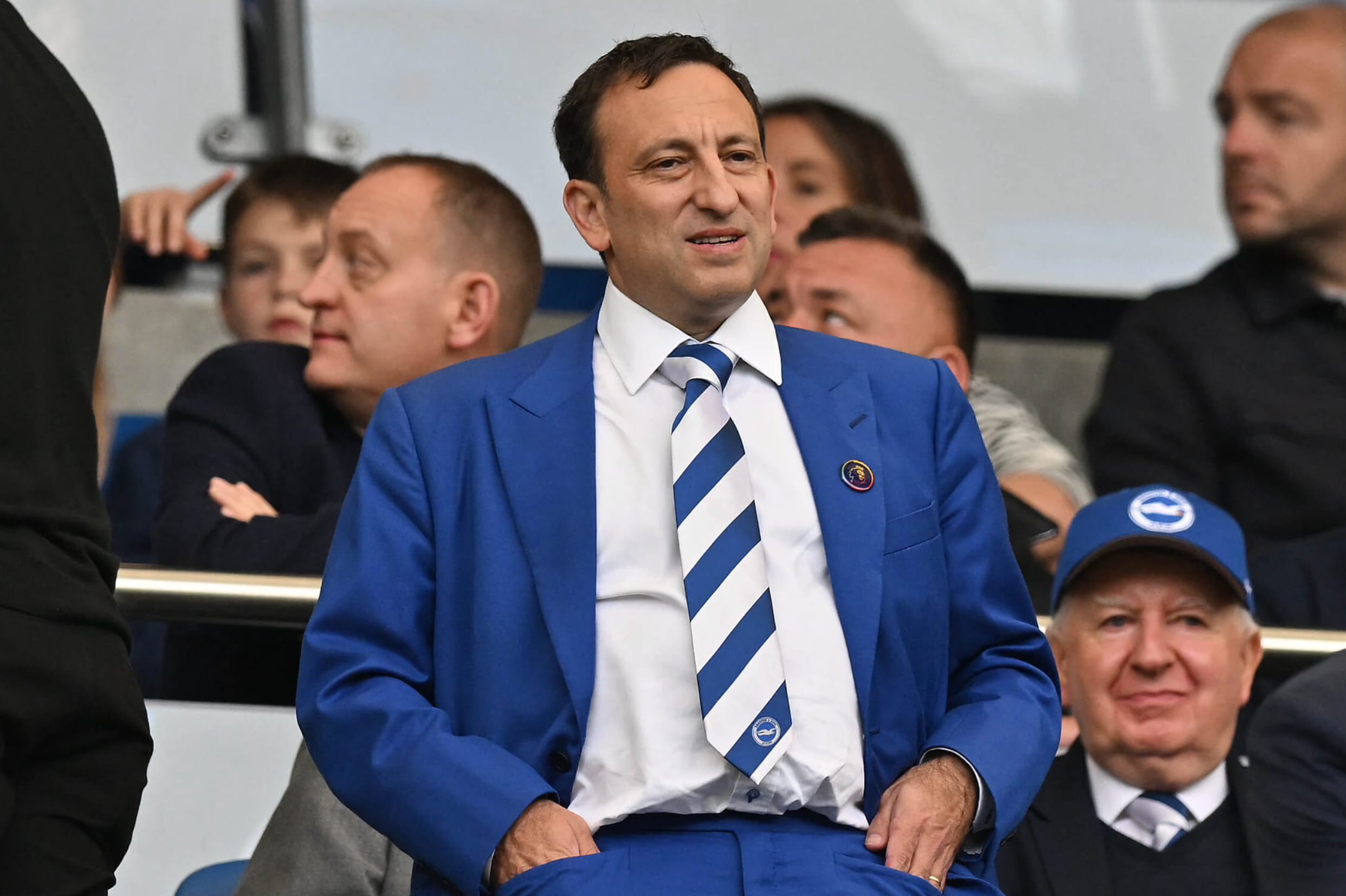
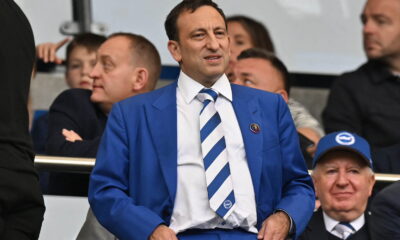
Brighton chairman Tony Bloom is a minority owner of Hearts
The timing may also be perfect. While Hearts have found a formula that works, both halves of the Old Firm have faltered. Rangers are in disarray, Celtic — still reeling from the shock resignation of Brendan Rodgers — are fragile, and the gap in resources suddenly feels less important than the gap in confidence. For the first time in forty years, the Scottish Premiership has a genuine third force with the consistency to sustain a title race.
Perhaps the biggest difference, though, is the sense of calm. McInnes has been clear that Hearts’ focus is on performance over hysteria — that their early lead means nothing if they lose discipline or composure. His squad believe that message. They look fit, organised and united, not fuelled by chaos but by competence.
If 2005/06 was the season when Hearts discovered how fragile a fairytale can be, 2025/26 is their chance to prove they’ve learned from it. Can Hearts win the Scottish Premiership this season? They have started exactly like this before — but this time, they might just be built to finish the job.

 Tottenham Agree £52m Fixed Fee for Brighton’s Van Hecke
- Tottenham Threaten to Hijack Summerville as United’s Window Unravels
- Liverpool and United Circle Juventus’s Thuram at €50m
- Arsenal agree personal terms with Manu Koné in €45m Roma deal
- Man United Target Summerville and Fernandes in £130m West Ham Double Deal
- Nico Paz Set to Stay at Como as Real Madrid Step Back
- Liverpool Chase £112m Diomande in Three-Way Battle
- Rashford Open to United Stay But Club Want Him Gone
- Liverpool Eye Surprise Midfielder as Mac Allister Future Wavers
- Chelsea Weighing £50m Move for Real Madrid’s Carreras