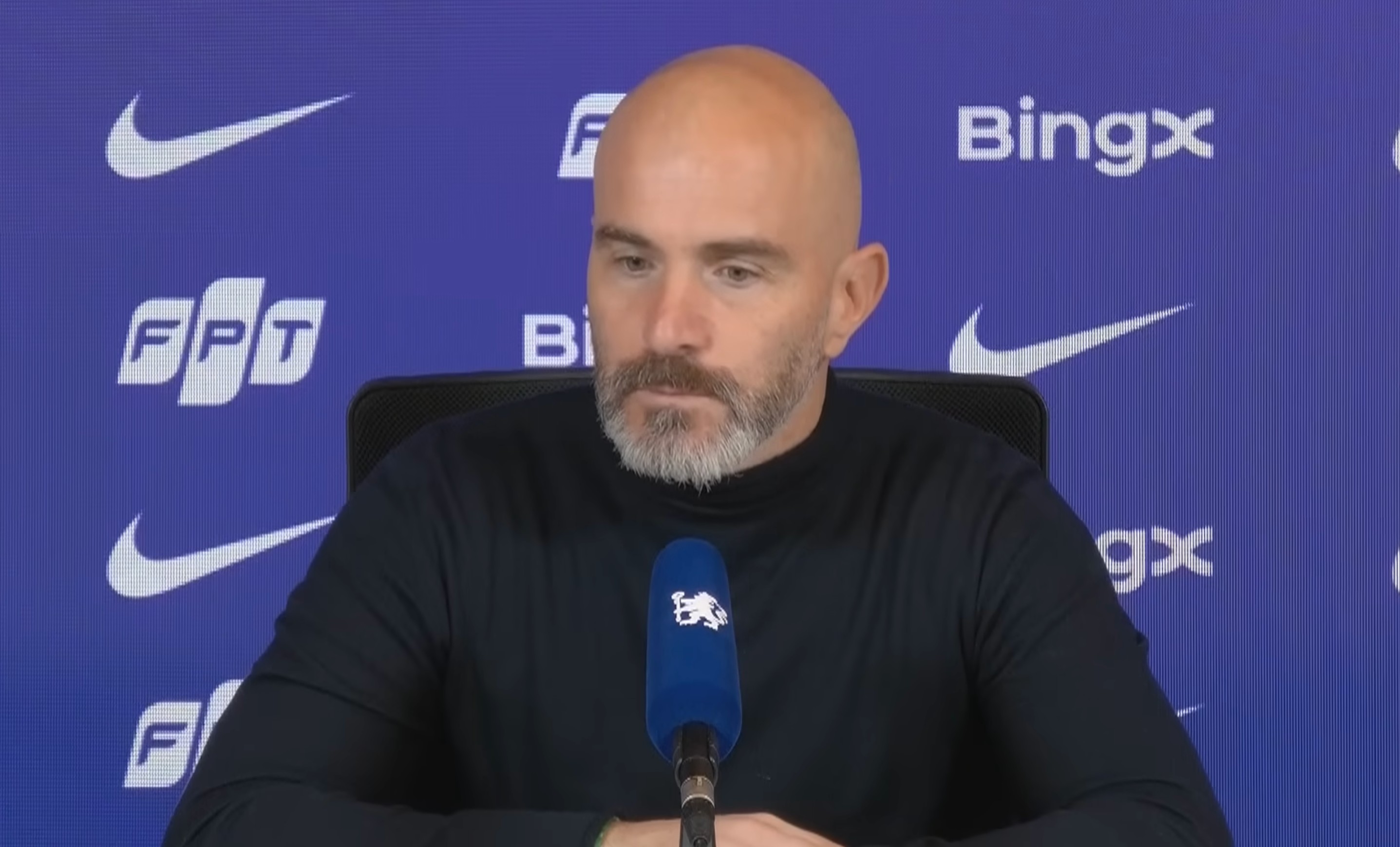
A new year, but the same old Chelsea. The most impatient club in Premier League history when it comes to giving managers time parted company with Enzo Maresca on the first day of 2026.
Maresca had been Chelsea’s 15th ‘permanent’ manager this century, but he lasted just 549 days — the previous average lifespan of a Chelsea manager in the Premier League era had been 623 days.
Why did Enzo Maresca leave Chelsea?
Results alone do not fully explain why Maresca’s reign came to such an abrupt end.
Chelsea’s December collapse — just one Premier League win from six matches — undeniably accelerated the pressure, but the breakdown between head coach and hierarchy had been building for weeks. By mid-December, Maresca publicly told the media he had endured the “worst 48 hours” of his Chelsea career. Those eyebrow-raising comments came after a 2-0 win over Everton.
Behind the scenes, tensions had emerged over player availability and workload management. Chelsea chiefs were unhappy that Maresca repeatedly went against medical advice, particularly regarding the minutes played by key injury-prone figures, most notably Reece James and Cole Palmer. Some club officials felt those decisions led to unnecessary injury recurrences and reflected poor judgement under pressure.
Compounding matters were Maresca’s conversations with other clubs. While Chelsea were aware he had spoken to Manchester City and Juventus about potential future roles, the timing — during a difficult run of form — was viewed internally as disrespectful, especially given he was already tied to a long-term contract.
By the time Chelsea drew 2-2 with Bournemouth on December 30 — a match in which some supporters openly booed Maresca’s decision to substitute Palmer — the relationship had arguably deteriorated beyond repair. Whether Maresca resigned or Chelsea moved first, the conclusion was the same: the partnership had become untenable.
Did Enzo Maresca do a good job at Chelsea?
Measured purely by on-field outcomes, Maresca’s Chelsea record stands up better than many of his recent predecessors.
When he arrived at Stamford Bridge in July 2024, Chelsea had just finished sixth in the Premier League with 63 points and had gone almost two and a half years without a trophy. In his only full season in charge, Maresca led the Blues to fourth place with 69 points, securing a return to the Champions League, while also delivering two trophies: the UEFA Europa Conference League and the expanded FIFA Club World Cup.
Across 92 matches in all competitions, Chelsea won 55 and drew 16 under Maresca. That win percentage of 59.78% was the highest achieved by a Chelsea manager since Thomas Tuchel’s 60% between January 2021 and September 2022.
In terms of 2025 alone, Maresca’s Chelsea were fifth in the Premier League’s calendar year table.
| Enzo Maresca’s time as Chelsea manager in numbers | |
|---|---|
| Days in charge | 549 |
| Games | 92 |
| Wins | 55 |
| Draws | 16 |
| Losses | 21 |
| Goals scored | 191 |
| Goals conceded | 98 |
| Goal difference | +93 |
| Win percentage | 59.78% |
| Trophies won | 2 |
Maresca’s win-rate places his tenure above the likes of Graham Potter, Frank Lampard, and Mauricio Pochettino in pure statistical terms. It was also higher than that of Jose Mourinho in his second spell at the club.
However, there was a feeling that Chelsea’s trajectory was going in the wrong direction of late. Their 2025/26 campaign began with promise, and by late November they were genuine outsiders for the title. Yet December exposed familiar flaws: a lack of control in midfield, erratic game management, and a side that appeared increasingly fragile once momentum turned.
Chelsea spent just under half a billion pounds on new signings during Maresca’s time in charge, including a £296.5m outlay in the summer of 2025, although Chelsea actually made a net transfer profit during that window. While Chelsea spent heavily during Maresca’s time in charge, recruitment continued to be driven by the club’s sporting structure rather than the head coach alone.
Ultimately, Maresca improved Chelsea’s league position, delivered silverware, and restored Champions League football. What he failed to do was convince the club — or a sceptical fanbase — that he was the right man to deliver on the club’s long-term goals.
What is next for Enzo Maresca?
Despite the abrupt ending, Maresca is unlikely to be out of work for long.
His tactical ideas, coaching pedigree, and trophy haul at Chelsea ensure his reputation remains intact across Europe. Interest from Manchester City and Juventus prior to his departure underlines how he is still viewed within elite coaching circles, even if questions remain about his suitability for the uniquely volatile environment at Stamford Bridge.
For Chelsea, the search now turns to another head coach tasked with delivering stability within a structure that has seen five permanent managers in less than four years. For Maresca, the challenge will be proving that his Chelsea exit was an unfortunate mismatch — not a warning sign.

 Savinho to Spurs: City Must Now Decide on £60m Sale
- Meslier Joins Arsenal on a Free as Kepa Prepares to Exit
- Forest Demand Guaranteed British Record as City’s £120m Anderson Bid Looms
- Rashford Wants Barca or Bayern — Spurs Are Just the Fallback Option
- Tottenham Agree £52m Fixed Fee for Brighton’s Van Hecke
- Tottenham Threaten to Hijack Summerville as United’s Window Unravels
- Liverpool and United Circle Juventus’s Thuram at €50m
- Arsenal agree personal terms with Manu Koné in €45m Roma deal
- Man United Target Summerville and Fernandes in £130m West Ham Double Deal
- Nico Paz Set to Stay at Como as Real Madrid Step Back