Is the Carabao Cup better than the FA Cup?
Some disregard the Carabao Cup as the FA Cup’s ugly sister. The FA Cup has more history and offers more prize money.
However, there are multiple reasons to believe that the Carabao Cup is actually the superior competition.
Why the Carabao Cup is better than the FA Cup
1. Exciting format
The EFL’s decision in 2018 to scrap extra time in the Carabao Cup in all rounds except the final has made a big difference.
It made games more exciting and increased the chances of upsets — such as Grimsby Town’s penalty-shootout win over Manchester United.
Dropping extra time has also tempted some managers to name stronger teams in the Carabao Cup — partly due to the reduced margin of error for the favourites, but also because there is now no risk of their top stars needing to stay out there for an additional 30 minutes.
The FA Cup’s recent decision to scrap replays will help its cause — at least for supporters of bigger clubs — but while extra time remains, the Carabao Cup will continue to be more exciting.
2. No VAR
The vast majority of Carabao Cup matches take place without the interference of a video assistant referee.
Only the final is guaranteed to have a VAR on duty, with the Carabao Cup choosing to use VARs only when every home team in the round has access to the necessary technology. This often means no VAR as long as a non-Premier League club remains in the tournament.
The absence of VAR makes football more exciting for supporters. It means fans get to celebrate goals harder and more authentically, rather than having to nervously wait a few minutes to be sure that they will not be disallowed following multiple replays.
3. No Wembley semi-finals
One of the major criticisms of the FA Cup since 2008 has been the use of Wembley Stadium for the semi-finals. Previously, FA Cup semi-finals used to take place at neutral venues up and down the country, with Old Trafford, Villa Park and Hillsborough often used.
Critics argue that holding the semi-finals at Wembley devalues the uniqueness of the final.
Meanwhile, in the Carabao Cup it is only the final that takes place at the national stadium, with the semi-finals taking place over two legs at each of the teams’ home grounds. This maintains the magic of Wembley but also gives each of the semi-finalists a special night in front of their own supporters.

4. Night matches
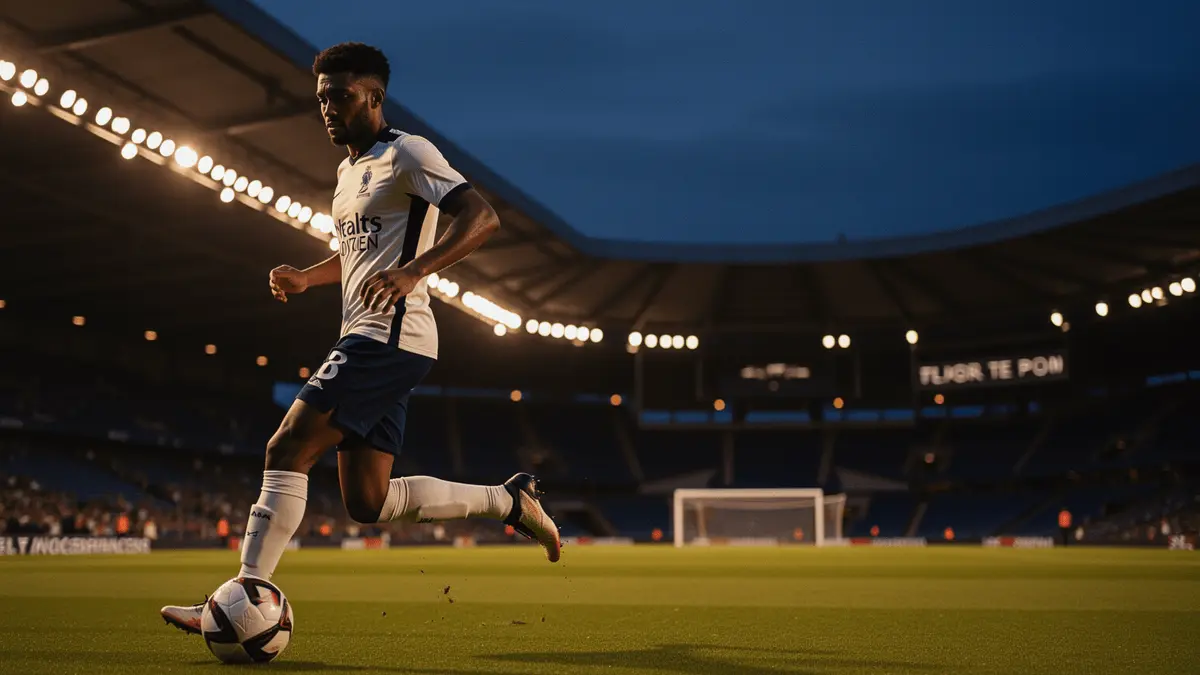
Every game in the Carabao Cup apart from the final is a night match.
This leads to better atmospheres in the stadiums. There is something special about football under floodlights.
Each Carabao Cup draw generally takes place straight after the final round of night matches too, so fans can excitedly follow on their phones or in their cars on the way back from the game. This is much better than in the FA Cup, where draws are often reserved for the BBC’s One Show on the Monday evening after the weekend’s action.
5. The Carabao Cup feels more winnable
One of the things that makes the Carabao Cup exciting — at least for clubs who are less used to lifting silverware — is that it feels more winnable.
Extra time in the FA Cup makes upsets less likely. It is basically an insurance policy for the big boys. But in the Carabao Cup, if the Premier League giants cannot win inside 90 minutes, then the lottery of penalties awaits.
The Carabao Cup’s shootout format increases the chance of shock results, which open up the draw for the rest of the field.
Prize money: Carabao Cup vs FA Cup
Despite having a shiny green sponsor, the Carabao Cup does not get close to the FA Cup when it comes to prize money.
The winners of the Carabao Cup receive just £100,000, while the team that lifts the FA Cup will bank £2.12 million.
EFL Cup prize money 2025/26 season
| Round | Prize money per team | Prize money per round |
| First Round Winners (35) | £5,000 | £175,000 |
| Second Round Winners (23) | £7,000 | £161,000 |
| Third Round Winners (16) | £10,000 | £160,000 |
| Fourth Round Winners (8) | £15,000 | £120,000 |
| Quarter-finalists (4) | £25,000 | £100,000 |
| Semi-finalists (4) | £25,000 | £100,000 |
| Runners-up | £50,000 | £50,000 |
| The Winners | £100,000 | £100,000 |
| Total prize pool | £966,000 |
FA Cup prize money 2025/26 season
| Round | Prize money per team | Prize money per round |
| Extra Preliminary Round Winners (223) | £1,125 | £250,875 |
| Preliminary Round Winners (136) | £1,444 | £196,384 |
| First Round Qualifying Winners (112) | £2,250 | £252,000 |
| Second Round Qualifying Winners (80) | £3,375 | £270,000 |
| Third Round Qualifying Winners (40) | £5,625 | £225,000 |
| Fourth Round Qualifying Winners (32) | £9,375 | £300,000 |
| First Round Proper Winners (40) | £47,750 | £1,910,000 |
| Second Round Proper Winners (20) | £79,500 | £1,590,000 |
| Third Round Proper Winners (32) | £121,500 | £3,888,000 |
| Fourth Round Proper Winners (16) | £127,000 | £2,032,000 |
| Fifth Round Proper Winners (8) | £238,500 | £1,908,000 |
| Quarter-final Winners (4) | £477,000 | £1,908,000 |
| Semi-final Winners (2) | £1,060,000 | £2,120,000 |
| Semi-final Losers (2) | £530,000 | £1,060,000 |
| Final Runners-up (1) | £1,060,000 | £1,060,000 |
| Final Winners (1) | £2,120,000 | £2,120,000 |
| Total prize pool | £21,140,259 |
How long has the EFL Cup been called the Carabao Cup?
Carabao has been the title sponsor of the EFL Cup since 2017, and that deal is currently due to continue until the end of the 2026/27 season.
The EFL Cup, originally known as the League Cup, was previously sponsored by Capital One from 2012 to 2016.
It was sponsored by various beverages before that, including Carling, Worthington’s and Coca-Cola, while its first-ever title sponsor was the Milk Marketing Board from 1981 to 1986.
The quality of the beverages sponsoring it may have plummeted over the past 40 years, but the EFL Cup in its current form is still better than the FA Cup in my humble opinion.

 Savinho to Spurs: City Must Now Decide on £60m Sale
- Meslier Joins Arsenal on a Free as Kepa Prepares to Exit
- Forest Demand Guaranteed British Record as City’s £120m Anderson Bid Looms
- Rashford Wants Barca or Bayern — Spurs Are Just the Fallback Option
- Tottenham Agree £52m Fixed Fee for Brighton’s Van Hecke
- Tottenham Threaten to Hijack Summerville as United’s Window Unravels
- Liverpool and United Circle Juventus’s Thuram at €50m
- Arsenal agree personal terms with Manu Koné in €45m Roma deal
- Man United Target Summerville and Fernandes in £130m West Ham Double Deal
- Nico Paz Set to Stay at Como as Real Madrid Step Back